Skip to content
Petite Revue, home

Affordable elevated capsule wardrobes for petite women.

Wardrobe tools

Wardrobe Tools

Four practical instruments for wardrobe decisions: a brand finder, a capsule builder, a packing planner and a cost-per-wear calculator. The Brand Finder is live; this is where each of the others stands.

Roadmap

What is being built

Each tool is designed against the same content model as the editorial, which is why the capsules and the directory came first.

  1. Available now

    Petite Brand Finder

    Filter the directory by the measurement you actually need.

    Open the tool
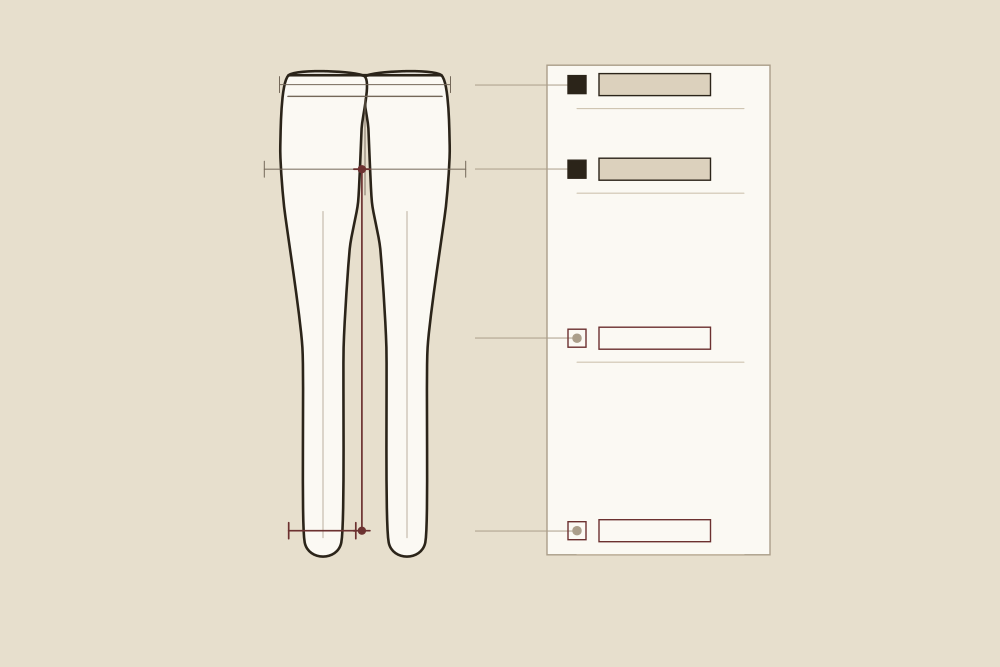
    A trouser with four fit measurements marked, beside a recording sheet where two rows are filled in and two are ruled and left empty.

    Search the brand directory by shortest published inseam, petite block type, price tier and category, so the question becomes “who publishes a 25-inch inseam under $150” rather than “who does petite”. Every result explains which criteria it met, on what basis, and where the data runs out.

    What it does

    • Filter by shortest published inseam
    • Separate true petite blocks from shortened standard blocks
    • Filter by category, price tier and shipping region
    • Compare up to four brands field by field
    • Keep a browser-local shortlist without an account

    StatusLive. Built on the directory data model; awaiting researched brand data.

  2. Available now

    Petite Capsule Builder

    A brief in, a plan out, with the measurements to shop it and the gaps named.

    Open the tool
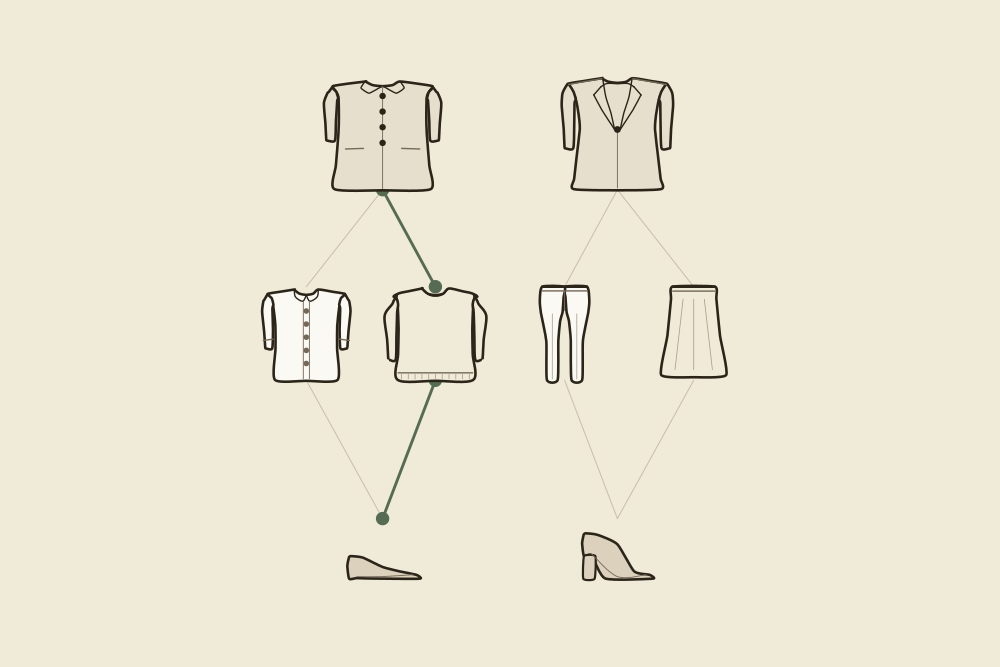
    Capsule pieces in three tiers, layers above core pieces above footwear, joined as a branching structure with one route through it traced to show a single outfit.

    Answer a dozen questions about what the capsule is for, and get a plan of garment roles with the petite measurement guidance for each one, a conservative outfit count, and an explicit list of what the plan does not cover. Rule-based and deterministic: the same brief always produces the same plan, and every decision has a stated reason.

    What it does

    • Plan by purpose, season, formality, laundry cadence and capsule size
    • Keep pieces you already own and build around them
    • See a conservative outfit count that does not multiply by layers or shoes
    • Read the coverage gaps and the adjustment that closes each one
    • Save several named capsules in this browser, print, export and import

    StatusLive. Plans garment roles with measurement guidance, not specific products.

  3. Available now

    Petite Packing Planner

    Trip constraints in, a scheduled packing plan out.

    Open the tool
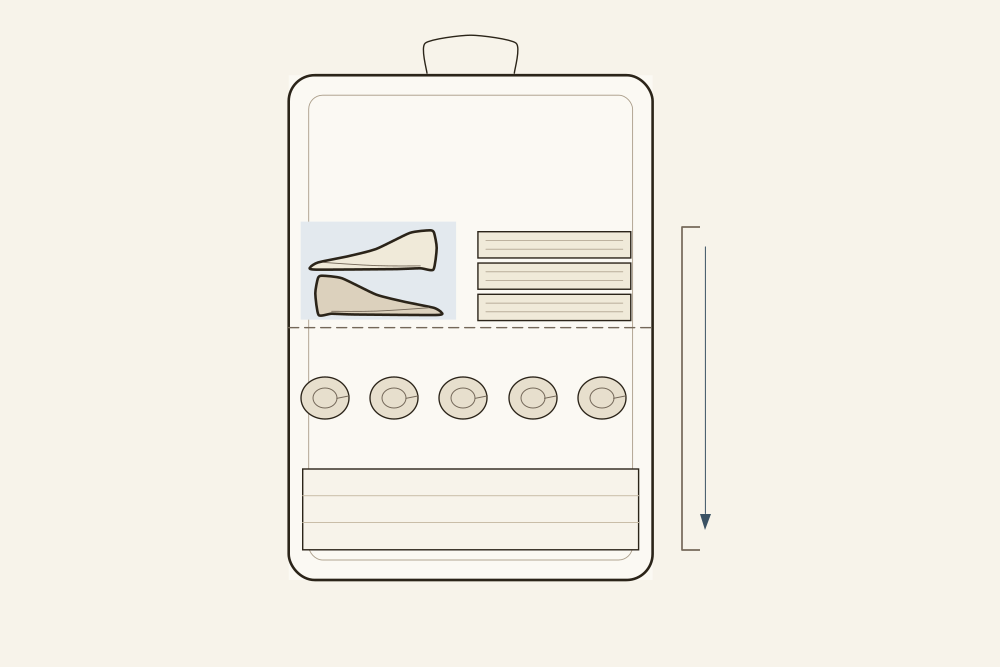
    A case seen from above divided into zones, with a nested pair of shoes and folded blocks at the hinge, rolled pieces across the middle and a flat layer at the foot.

    Enter trip length, the temperature band you expect, how formal the days are and what laundry you will have. The planner returns garment roles with petite measurement guidance, a day-by-day outfit plan scheduled against repeat-wear limits, and an explicit list of what the plan does not cover. It can plan from a wardrobe you have recorded rather than describing what to look for.

    What it does

    • Plan by duration, temperature band, rain expectation, formality and activities
    • Day-by-day outfits scheduled against laundry and repeat-wear limits
    • Separate what to wear on the way from what goes in the bag
    • Plan from a browser-local wardrobe shared with the Capsule Builder
    • Save several named trips, print the plan, export and import

    StatusLive. States the weather you gave it; it never consults a forecast.

  4. Available now

    Petite Wardrobe Gap Finder

    Demonstrated gaps, substitutions first, and “nothing needs buying” as a real answer.

    Open the tool
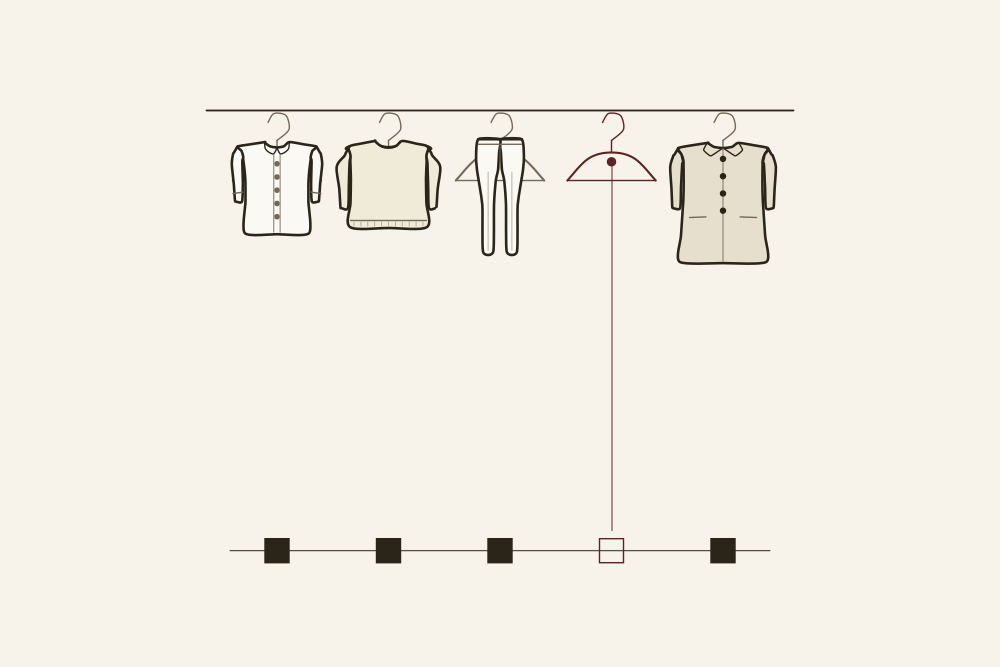
    A rail of hanging garments with one hanger left empty, connected to a row of role markers below in which four are filled in and one is left open.

    Checks the wardrobe you actually own against the scenarios you actually have (saved capsules, saved trips, or an everyday brief) and demonstrates each gap with the exact outfits and days it would unlock. Existing pieces are credited first, substitutions outrank purchases, and no ideal-wardrobe template exists anywhere in it.

    What it does

    • Analyze a browser-local wardrobe against explicitly chosen scenarios
    • Demonstrate every gap with the exact needs it would unlock
    • Resolve needs by substitution or reactivation before any purchase
    • End purchase-worthy gaps in petite measurement specifications, never products
    • Report “nothing needs buying” as a first-class outcome

    StatusLive. A gap is a demonstrated deficiency, never an absent category.

  5. Available now

    Outfit Formula Generator

    One to ten explained outfit formulas, mapped onto the pieces you own.

    Open the tool
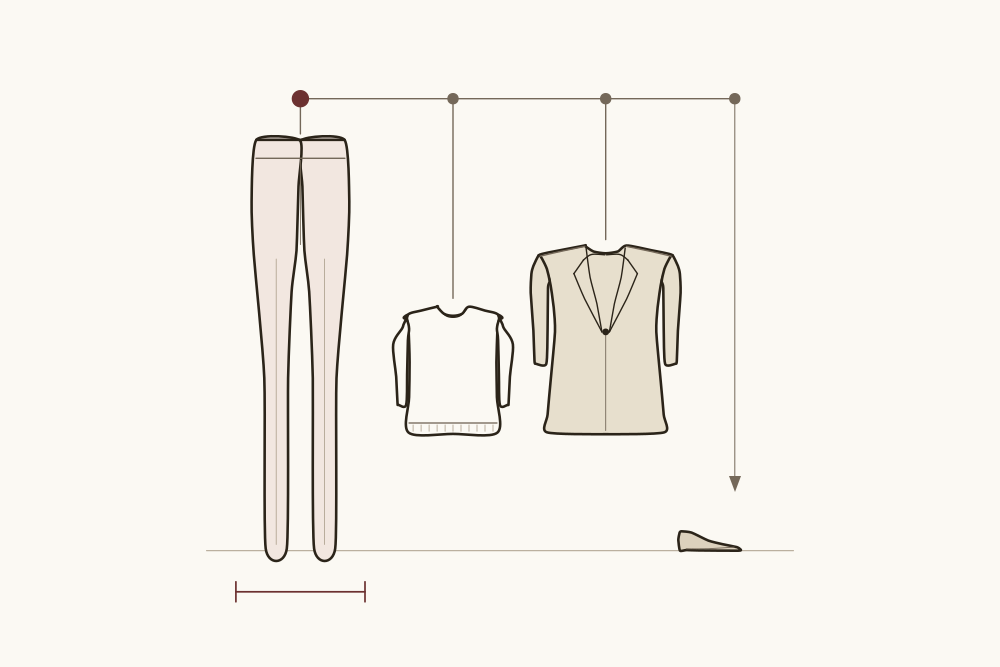
    Four garment roles at four sizes hung from one order line: a trouser drawn largest as the anchor, then a base, a layer and a shoe.

    Composes outfit formulas from garment roles the way the editorial writes them by hand: a bottom or dress as the anchor, a base, a layer where the band wants one, a shoe chosen for the day. Deterministic, explained, and mapped in your browser onto the wardrobe you have recorded.

    What it does

    • Compose one to ten formulas from a shareable role-level brief
    • Explain the petite proportion logic on every formula
    • Map formulas onto a browser-local wardrobe and name missing roles
    • Force a role in with must-use, or rule roles out
    • Save, print, export and import formulas locally

    StatusLive. No shuffle and no styling model: the same brief always composes the same formulas.

  6. Available now

    Cost-per-Wear Calculator

    The number that decides whether a garment was expensive.

    Open the tool
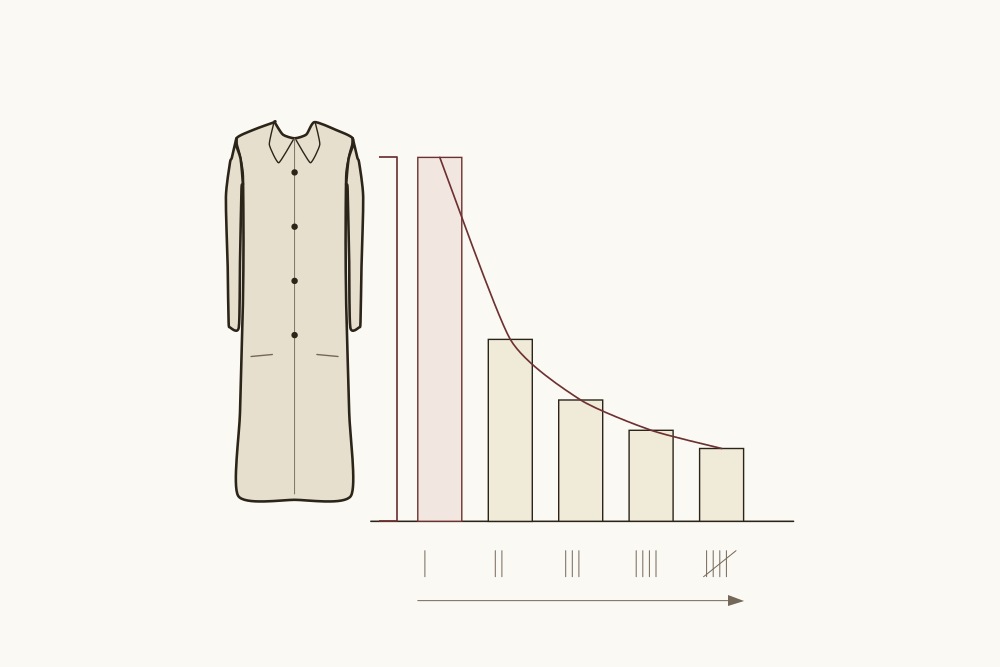
    A coat beside five bars falling steeply from left to right as the tally of wears beneath each one grows, showing the same sum divided by more and more wearings.

    Adds what a piece actually cost, including the alteration, which is where petite purchases are usually mispriced, and divides by the wears you have actually recorded. Unknown values stay unknown, projections exist only when you type them, and nothing is ever called a good or bad investment.

    What it does
    • Total cost basis from acquisition, alteration and optional maintenance
    • Current cost per recorded wear with explicit unknown and zero-wear states
    • Reader-entered what-if scenarios, never automatic projections
    • A one-off mode that stores nothing, and a saved-item mode from your wardrobe

    StatusLive. It divides two numbers you typed; it does not judge them.

In the meantime

What already does the job on paper

Every tool above began as a worksheet. The worksheets are further along than the software.