Skip to content
Petite Revue, home

Affordable elevated capsule wardrobes for petite women.

Proportion

The Proportion Series · Part 2

The Fall Edit

Knitwear Scale: Chunky Without the Bulk

Heavy knits are not off-limits at 5’2″. Gauge, body length and neckline depth decide whether they add warmth or add width.

By Petite Revue Editorial Desk

6 min read

6 min readstory
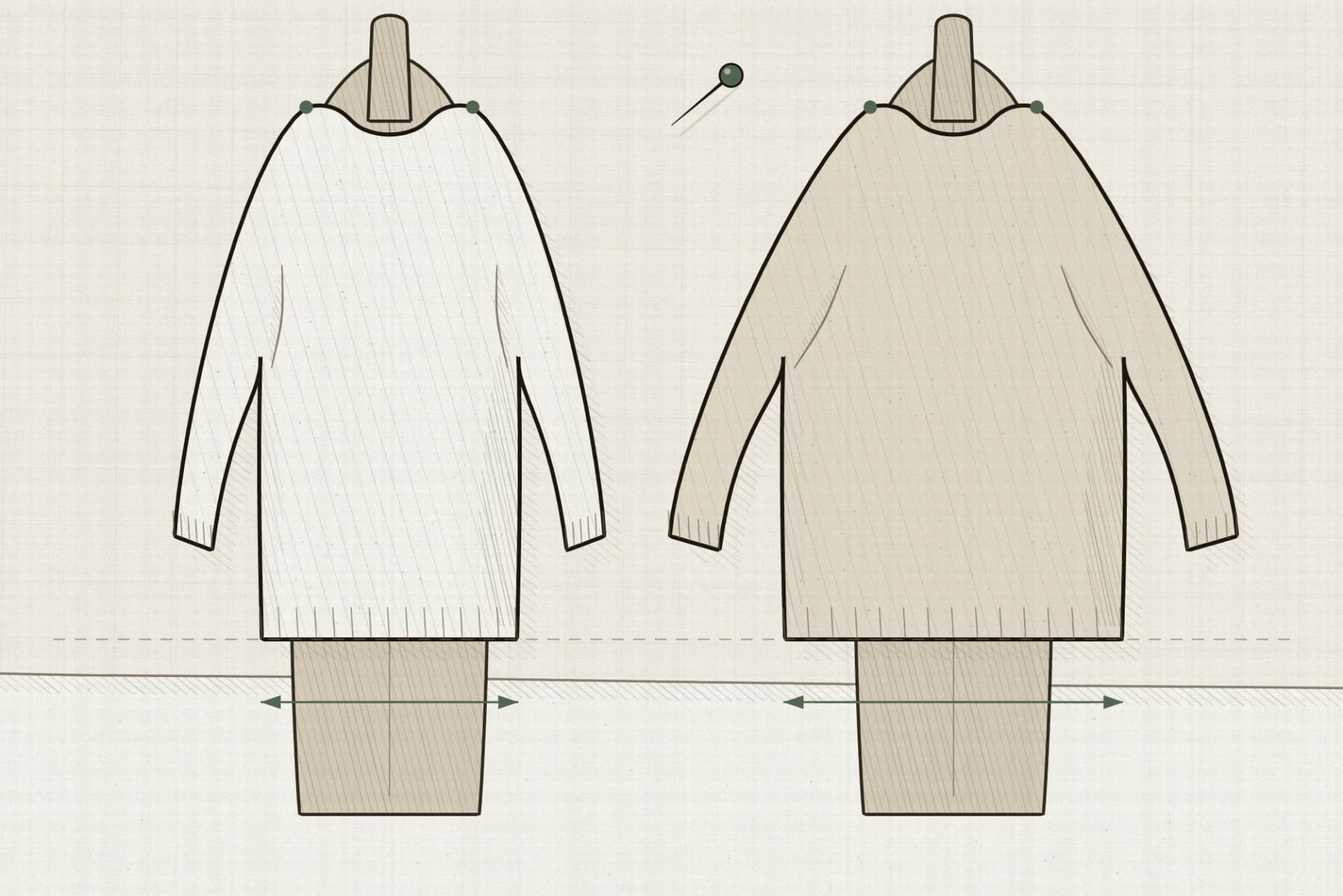
Two display torsos wearing the same knit at two volumes, the wider one dropping further off the shoulder, with both hems on one ruled line and each body width measured beneath it.

Guidance in this article is derived from brands’ own published garment measurements. Nothing described here has been worn or tested by the publication.

The received wisdom is that petite frames should avoid chunky knitwear. It is not wrong so much as unhelpfully broad: the problem was never weight, it was volume arriving in the wrong places and staying there.

Gauge, length, neckline

Gauge controls how far the fabric stands away from the body.Footnote 1 A heavy yarn knitted at a tighter gauge gives the same warmth with perhaps a third of the projection. Body length controls where the volume stops: 22″–23″ finishes at the high hip and keeps the waistband visible, while 26″ turns a sweater into a tunic and removes the highest useful horizontal line from the outfit.

Neckline depth is the one most often overlooked. A high crew on a short neck closes the only vertical space above the shoulders. A wider or slightly deeper neckline reopens it, which is why the same sweater in a V or a wide boat neck can look like a different garment.

Volume is fine. Volume that never ends is the problem.

Keep the waistband visible, keep the neckline open, and the yarn can be as heavy as the weather requires.

Notes

  1. Gauge describes how tightly a yarn is knitted, usually as stitches per inch. The same weight of yarn at a tighter gauge produces a denser fabric that stands away from the body far less.

Sources

Guidance in this article is derived from the published material below. No garment described here has been worn or tested by the publication.

  1. Garment measurements

    Published knitwear body-length measurements

    Various brands

    The 22″–26″ body-length bands referenced in this piece.

    Consulted 2026-07-06No public link recorded

Reading path

Start here

Foundations this piece builds on.

Go deeper

Assumes you have read this one.

Editorial

Petite Revue Editorial Desk

The editorial desk plans each issue, commissions the guides and keeps the house point of view consistent: clothes should fit a shorter frame without alteration wherever that is possible, and look considered rather than expensive.

Share this story

https://www.petite-revue.com/editorial/knitwear-scale

Where to next

Continue reading

Chosen by relationship to what you have just read, not by recency.

All stories

Save for later

Pin this story

Three formats travel differently: a headline pin for discovery, a quotation for reach, and a checklist for saves. All are 2:3.

  • Warm sand illustrated plate with a faint outline of a coat low in the frame, used as a Pinterest graphic background.

    Petite Revue

    Chunky knits without the bulk

    Gauge, body length, neckline depth

    Headline pin · 1000 × 1500

    Three variables that make heavy knitwear work on a petite frame: gauge, body length and neckline depth. A practical petite styling guide for autumn.

    Save to Pinterest
  • Soft cream illustrated plate with a faint knit outline and a fine rule, used as a Pinterest quote background.

    Petite Revue

    Volume is fine. Volume that never ends is the problem.

    The Proportion Series

    Quote pin · 1000 × 1500

    Why heavy knitwear works on petite frames when the waistband stays visible and the neckline stays open.

    Save to Pinterest
  • Series

    The Science of Petite Fit

    Garment drafting, published measurements, and why a size label tells you almost nothing.

    5 of 6 published

  • Series

    Capsule Wardrobe Academy

    Building a small wardrobe that covers a real month, one decision at a time.

    1 of 5 published

  • Series

    Brand Investigation

    Reading what brands publish about their petite blocks, and what the gaps reveal.

    4 of 4 published