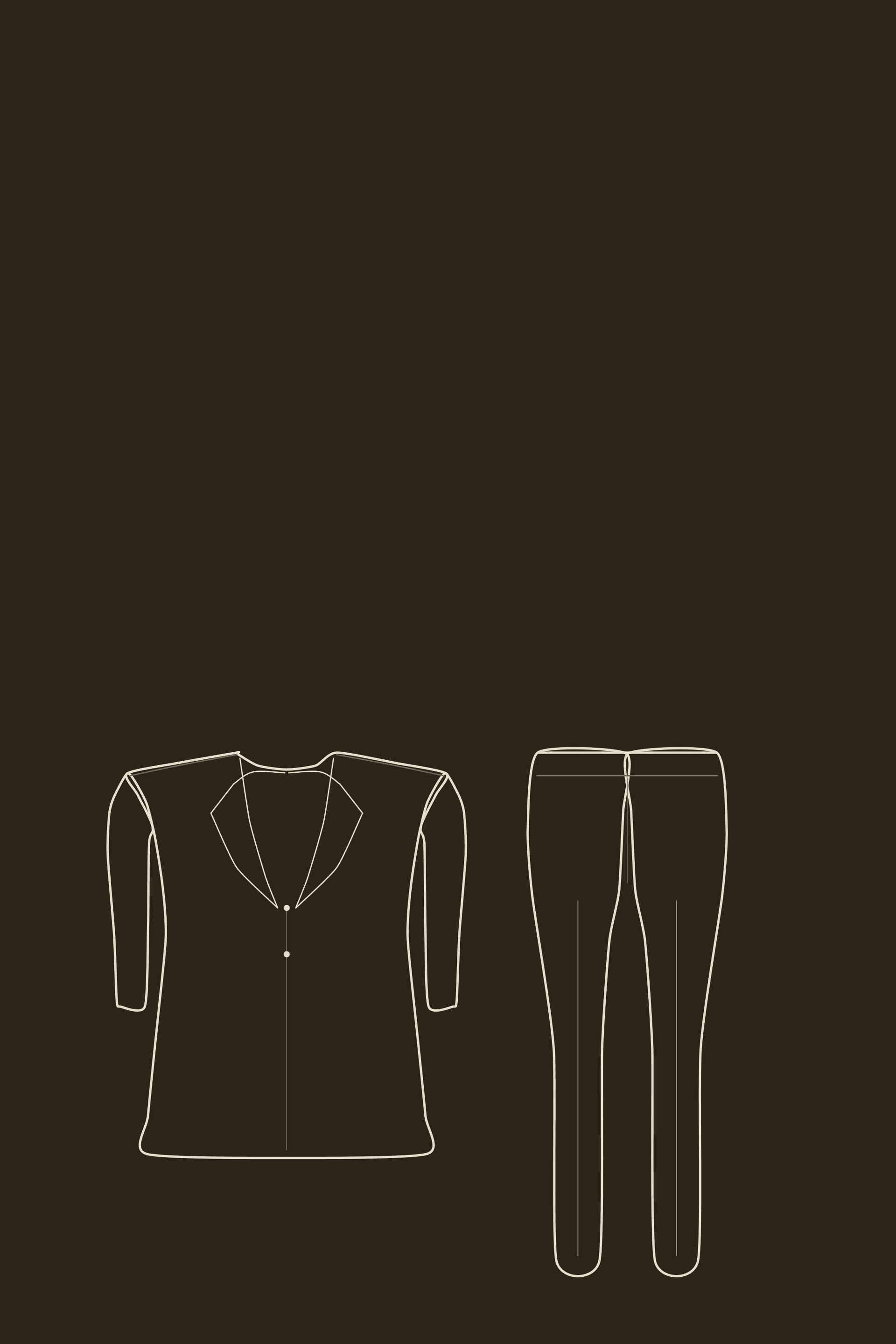
Between the last genuinely warm week and the first genuinely cold one there are about six weeks in which nothing in a wardrobe works on its own. A shirt is not enough at eight in the morning and too much by two in the afternoon. The standard answer is to layer. The standard answer also quietly assumes a torso several inches longer than the one most of us are dressing.
Layering is not harder at 5’4″ and under. It is less forgiving. The same coat, the same knit and the same trouser will read as considered on a longer frame and as borrowed on a shorter one, and the difference is almost never the garments themselves. It is where their edges land.
Why layers cost a petite frame more
Every layer introduces at least one horizontal line: a hem, a cuff, an open placket, a collar. Horizontal lines interrupt vertical space. On a 5’9″ frame there is enough vertical space to absorb four or five of them before anyone notices. On a 5’2″ frame the same four lines divide the body into visibly short segments, and an outfit begins to read as stacked rather than layered.
This is a geometry problem rather than a styling failure, which is genuinely good news, because geometry can be planned. The three rules below all do the same thing from different directions: they reduce the number of visible breaks, or they push the remaining breaks further apart.
Rule one: keep the layers in one tonal family
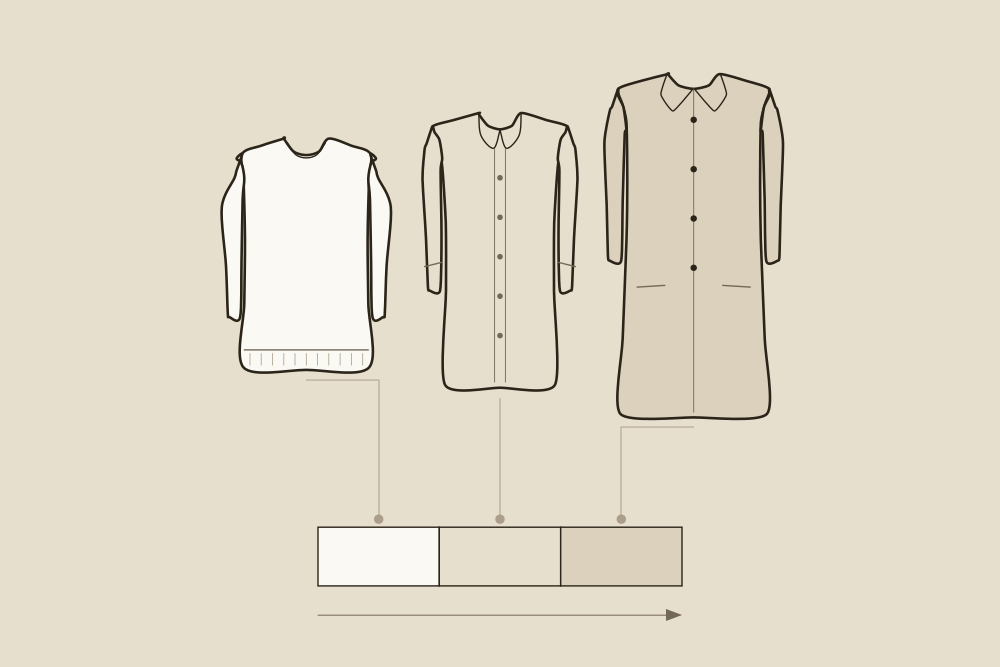
The fastest way to remove a horizontal break is to make it invisible. When a knit, a shirt and a coat sit within two or three steps of one another tonally, the eye reads the column as continuous and stops counting hems.Footnote 2 It is why camel, oatmeal, stone and espresso combinations hold together so well on shorter frames, and why a navy coat over a cream sweater over black trousers, three unrelated values, makes the same body look shorter.
Tonal does not mean matching, and it certainly does not mean beige. A muted olive shirt under a deeper olive knit under a stone coat has plenty of variation close up, and reads as one uninterrupted line from across a room.
The tonal column
- Fine-gauge knit in the mid tone
- Shirt one step lighter, collar out
- Unstructured coat one step deeper
- Trouser in the deepest tone
- Shoe repeating the trouser
Rule two: let one layer be decisively the longest
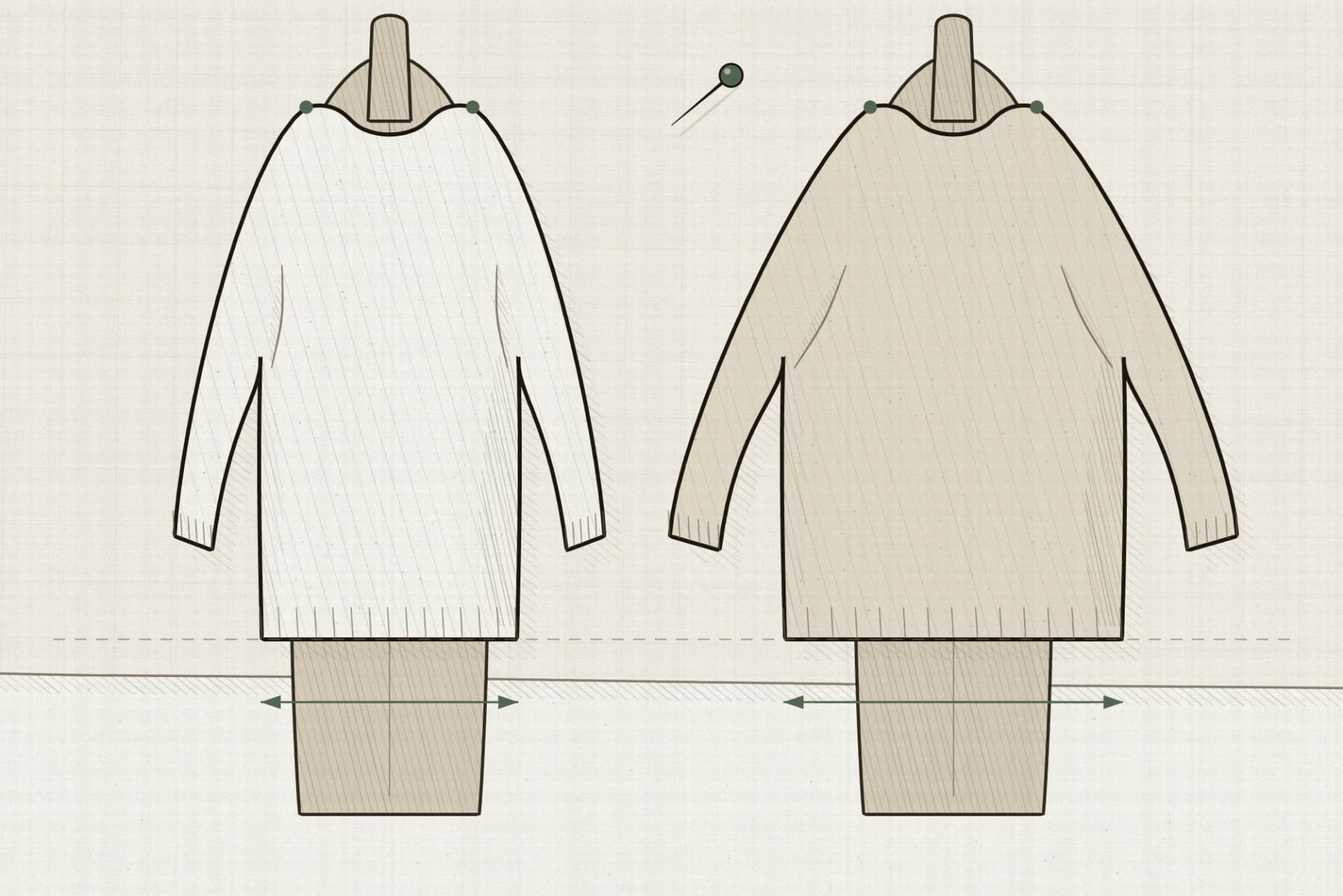
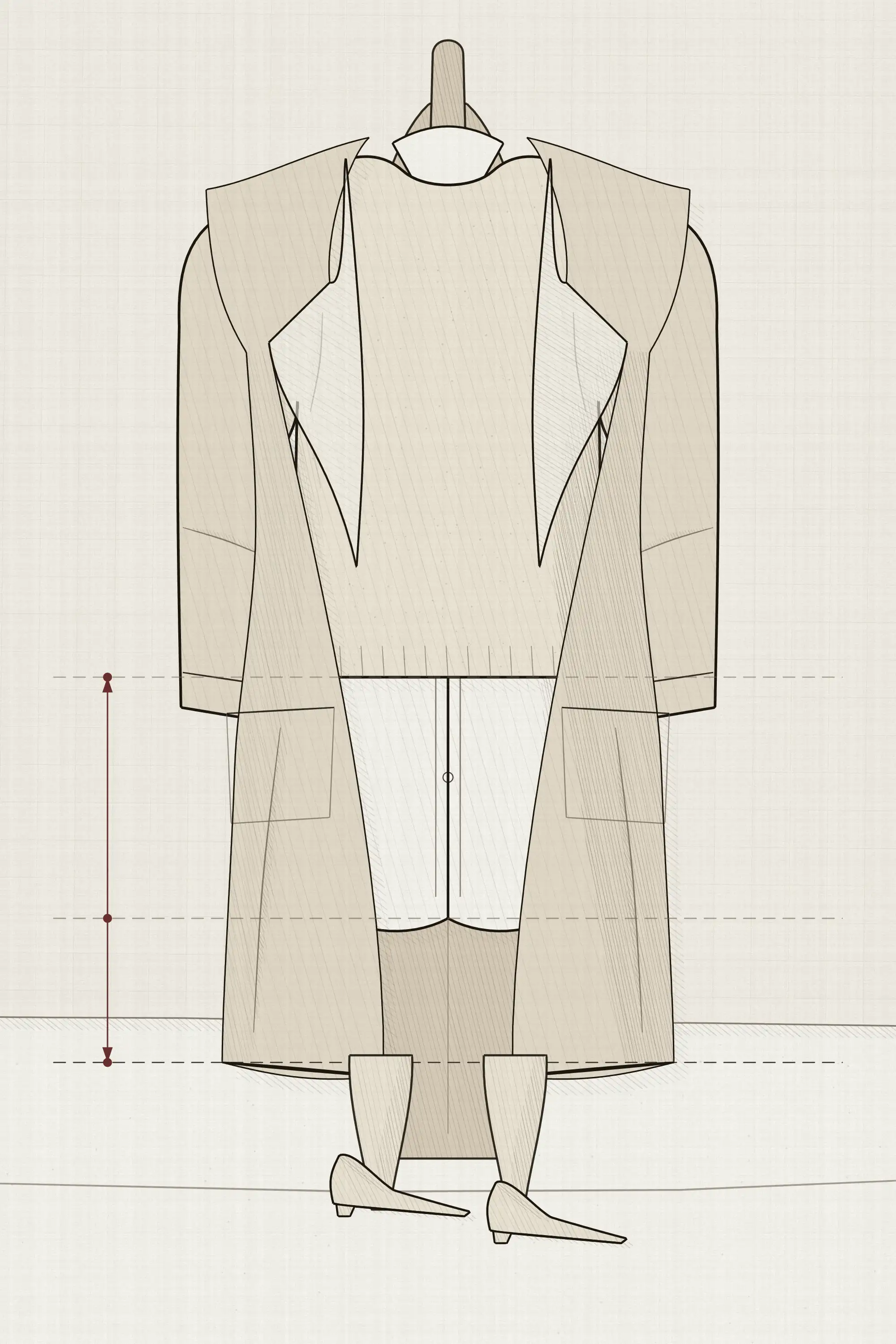
Layers compete when two hems land within a few inches of each other. A jacket finishing just below a sweater finishing just below a shirt creates a band of near-identical lines across the widest part of the body: the least useful place to put them for anyone, and a real problem when the whole torso measures around fifteen inches.
Choose one layer to be clearly the longest, then keep everything else at least four inches clear of it. A long unstructured coat over a cropped knit works. A mid-thigh coat over a hip-length cardigan does not, however good either piece is on its own.
One decisive long line will always beat three polite ones.
Rule three: shorten the top layer, not the base
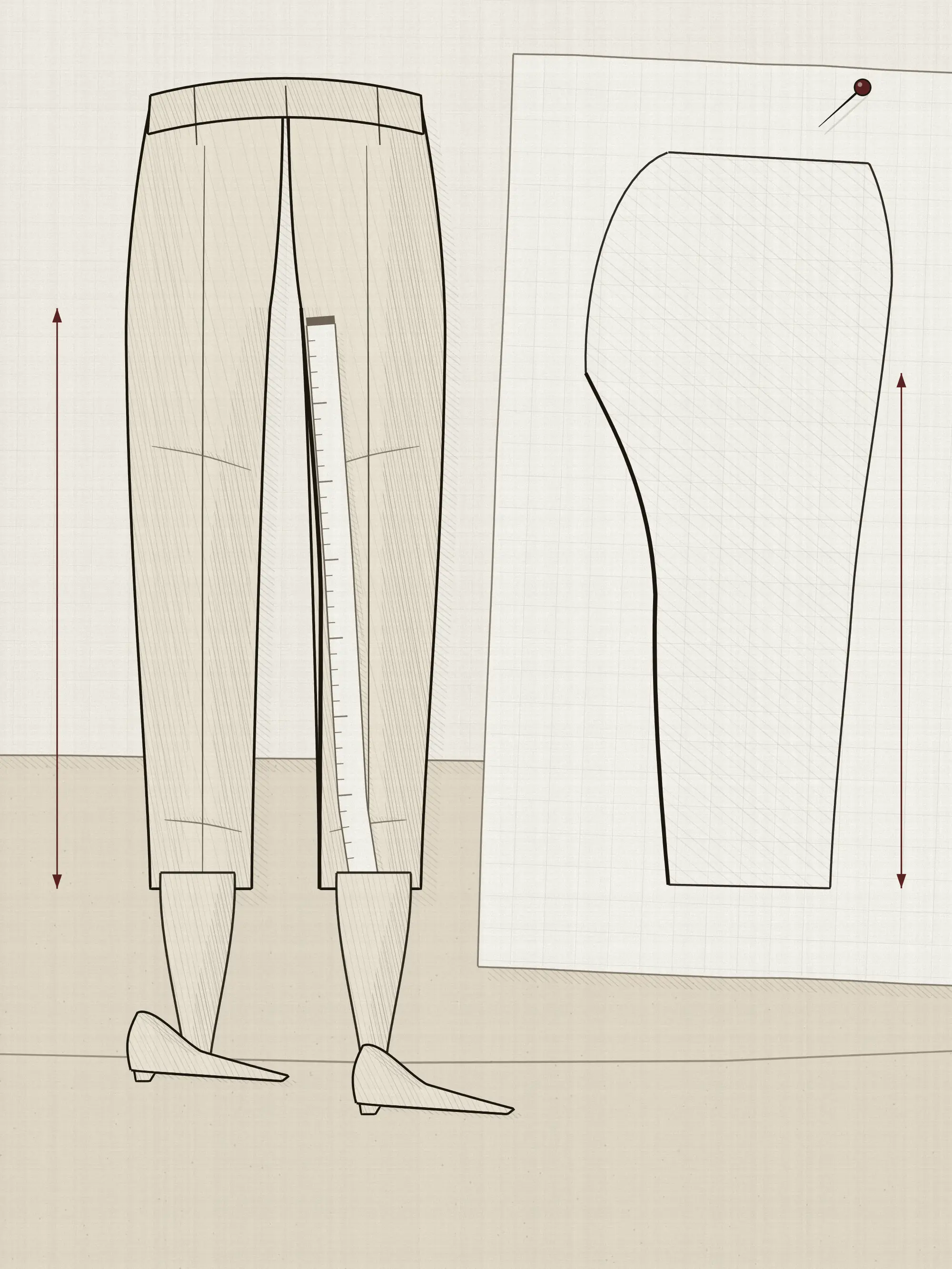
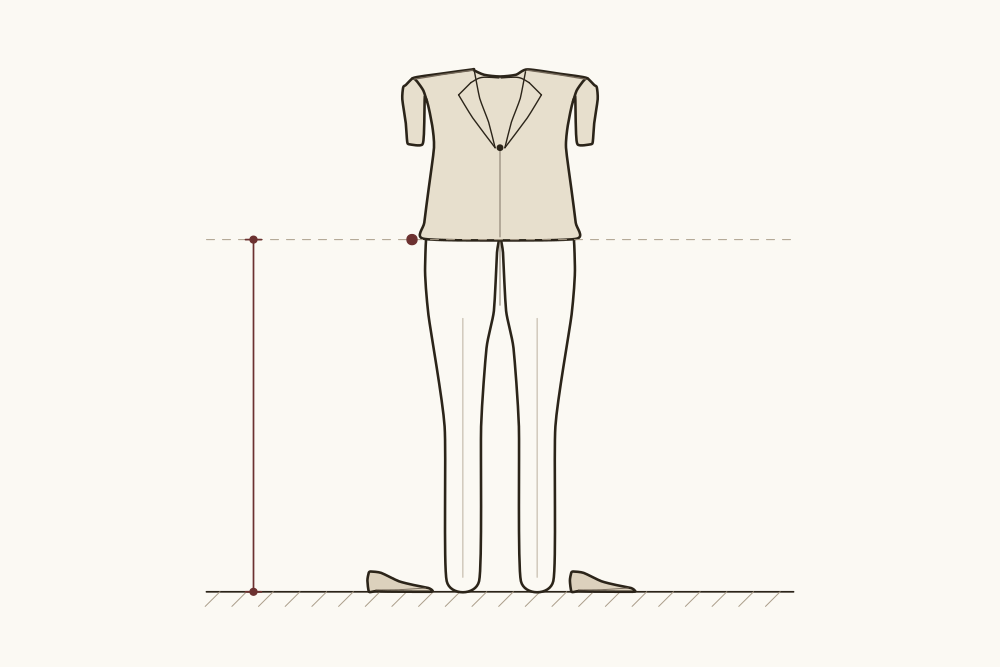
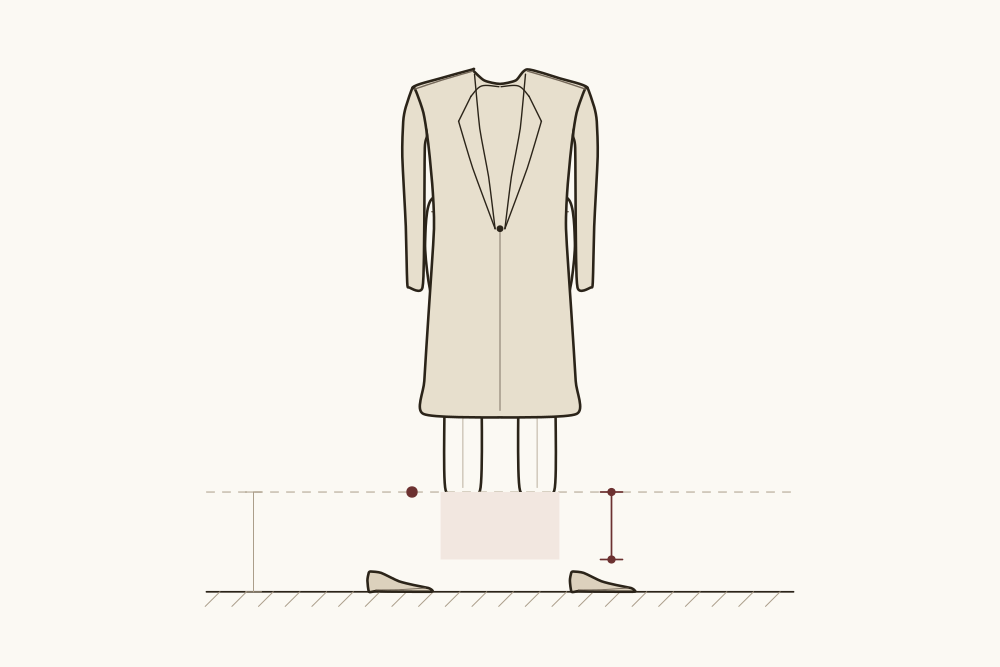
When something has to be cropped, crop the outermost layer. A cropped jacket over full-length trousers keeps the leg reading as one line from waistband to floor. A cropped trouser under a long coat does the opposite: it puts a hard break at the narrowest point of the leg and then hides the length that was doing the work.
- Cropped jacket over a full-length trouser: the leg reads as a single line.
- Full-length coat over a cropped trouser: the break lands at the ankle and the coat conceals everything above it.
- Cropped knit over a high waistband: the waistband becomes the highest horizontal line, which is exactly where you want it.
- Cropped everything: two breaks land close together and cancel each other out.
The four numbers to check before you buy
None of this requires a tailor, but it does require four numbers. Most brands publish all four; very few shoppers look them up.
- Back length: shoulder seam to hem, for every outer layer. Compare it against your own shoulder-to-hip measurement rather than against a size label.
- Sleeve length measured from the centre back, not from the shoulder. A true petite block shortens the sleeve; a standard block shortens nothing.
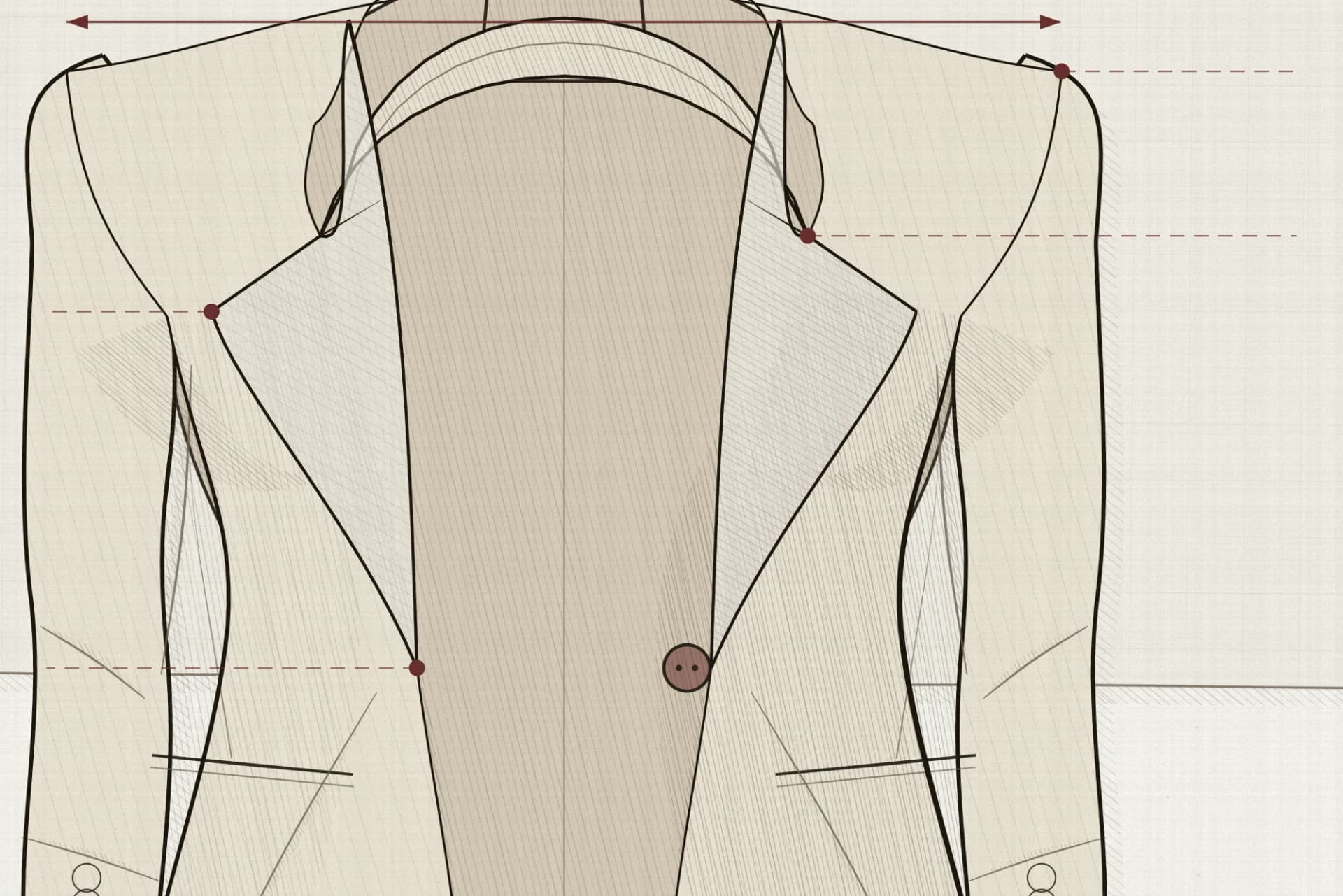
- Shoulder width. A shoulder seam sitting even half an inch wide drops the entire sleeve and introduces a false horizontal at the upper arm.
- Inseam published in inches rather than as “regular”. A 30-inch inseam is not a petite inseam, whatever the size tag says.Footnote 3
Six weeks of transitional weather is not long enough to build a wardrobe around, and it does not need to be. Three or four pieces chosen against those four numbers will carry the whole season, and they will carry the next one too.