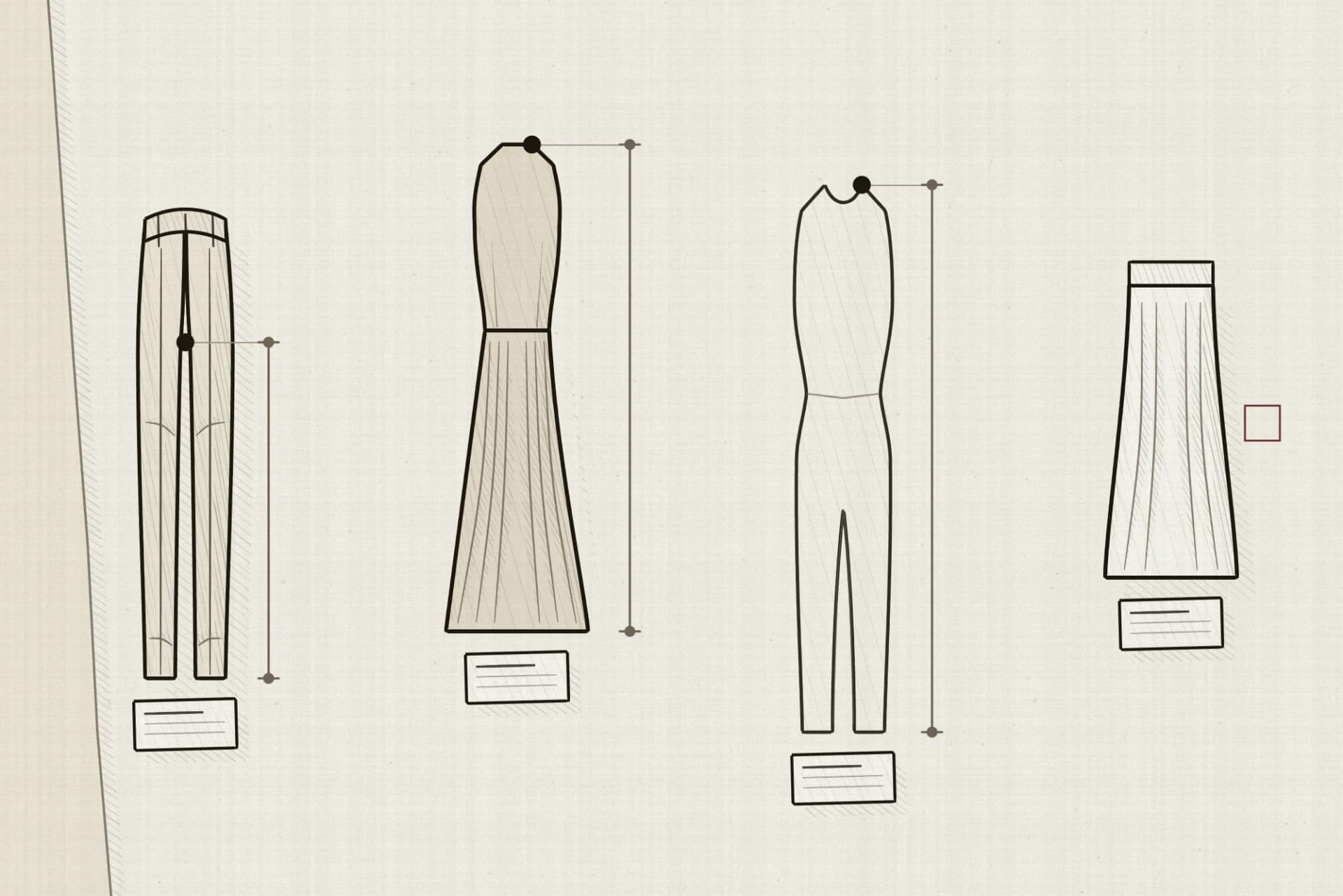
A Phase Eight petite coat is 103 centimetres. A Whistles petite coat is LONG. A Karen Millen petite coat is knee-length. All three were published by British brands in August 2026, all three under the word petite, and only one of them is a measurement. That is the problem this guide is about.
The 103 comes with a measuring point printed beside it: side neck point to hem. The LONG is the value of a field the page itself labels Length. The knee-length is a landmark in a product title, on a page publishing no figure and never saying whose knee. Only the first can be set beside another number.
This guide rests on twenty-five records from twenty-five official pages across six brands, read on 9 August 2026 and set out in full below. It does not say what length a coat should be, because nothing in the sample establishes that. What the sample supports is a method: separate the fields a coat page publishes, record what each one is, and find out whether two coats can be compared before comparing them.
What a coat page can settle, and what it cannot
A product page states some things and leaves others out, and the difference is not visible in the layout: a field with a value and a field that was never printed sit in the same list, in the same type.
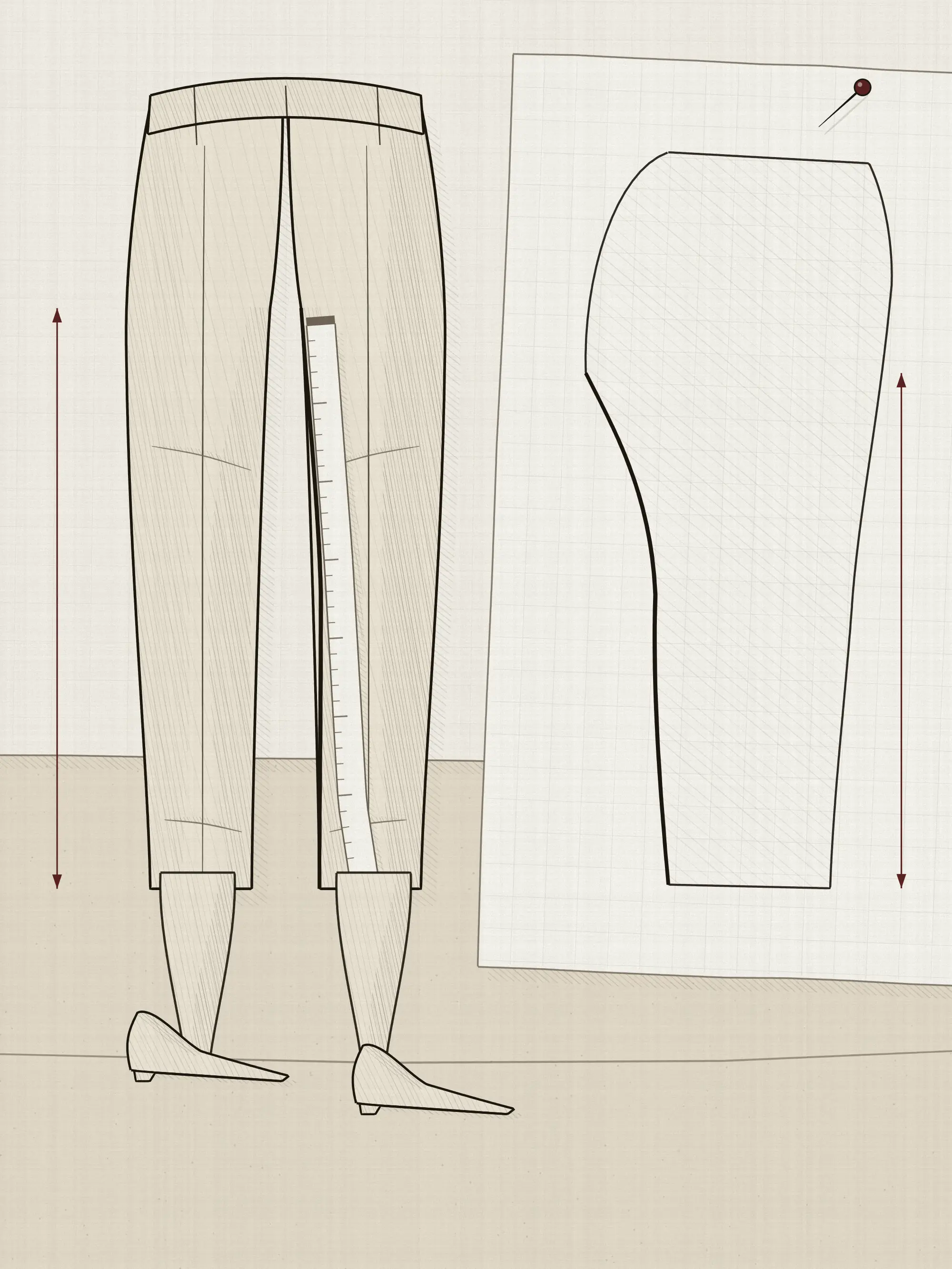
What a page can settle is what it prints. Hobbs prints “91.5cm / 36 inches” for a petite trench and “Side neck point to hem” beside it, settling a length and the two points it runs between. Wallis prints “Oversized silhouette with drop shoulder design for a contemporary, relaxed fit”, which names a shoulder construction.
What a page cannot settle is where any of it lands on a body. A garment measured at 91.5 centimetres from the side neck point to the hem does not establish where that hem will fall on a particular person, because the page publishes none of the body dimensions such a prediction would need. The figure describes the garment.
The audit: nine questions per page
The questions the rest of the guide works through, in the order a product page tends to answer them. For several the answer will be that the page does not say, which is itself worth recording.
- What garment or coat category is this, in the brand’s own words?
- What length figure is actually published, if any?
- Where does that length start and end?
- Which size or fit designation does the figure belong to?
- What does the page publish about sleeves, and what kind of statement is it?
- What does it publish about shoulders, and what kind of statement is that?
- Which construction details are stated?
- Which details remain not established?
- Given all of the above, is this record genuinely comparable with another?
Length: the figure and the point it is measured from
Fifteen of the twenty-five records publish a garment length in centimetres, and all fifteen print the two points it runs between. A figure without a measuring point is not a weaker figure, it is a different kind of thing, because two numbers cannot be compared until you know what distance each spans.
Record the origin in the page’s own words rather than tidying it into a house term. Hobbs prints “Side neck point to hem” on eight coat pages in this sample and “Side neck point ot hem” on the ninth. Phase Eight prints it three ways across six pages, including “Side neck point to hemem” and “shoulder neck point to hem”.
Those variants are recorded exactly as published and not normalised, because correcting a source is not this publication’s to do. They are also not evidence that the measurements differ: no page here states that two wordings describe two methods, and none states that they describe one. What they establish is that an origin has to be recorded as printed, so a later reader sees what was on the page rather than what somebody tidied it into.
The ten records with no figure are not a smaller version of the fifteen with one. Every Whistles coat page in this sample has a field labelled Length whose value is a word, and none of them publishes a centimetre figure or names a measuring point. The Karen Millen and Wallis coat pages here publish no coat length either. Those pages have not published a shorter coat; they have not published a length.
A length word is not the figure
Sixteen records carry a length or category word the page prints: trench, peacoat, puffer coat, jacket, knee length, full-length design, LONG, SHORT. These are the brands’ own labels, worth recording as labels. What they are not is a measurement, and no page printing one defines it numerically.
The clearest case is Whistles, where the word sits in a field explicitly labelled Length. Two Whistles trenches in this sample are both LONG and neither page publishes anything distinguishing them, so within these records the word does not separate two garments inside one brand. A third is SHORT, and nothing on that page says short compared with what.
Category words behave the same way. Phase Eight publishes a petite peacoat at 74.5 centimetres and a petite trench at 113 centimetres. Hobbs lists a garment among its coats, calls it a jacket, and publishes 59 centimetres for it. Three figures under three category words, and no page relates any of them to another.
None of that makes the labels meaningless or misleading. They tell a reader what kind of garment they are looking at and give a shop a way to group a rail. The supported conclusion is narrower: a label alone is not sufficient for a numeric comparison, so two coats sharing one have not been shown to share a length.
Four same-style pairs, read off eight pages
Hobbs is the one brand in this sample publishing both a petite and a regular page for the same style, in the same colour, with a figure and the same stated origin on each. There are four such pairs, and they are the only same-style petite and regular paired evidence in this sample.
Their provenance is worth stating before their numbers are. Each is a petite figure on one page and a regular figure on a separate page, so the same-page pair count across twenty-five records is zero. A same-page pair would carry stronger provenance, both values being co-published in one context. This sample contains none, so every difference below is one set out by placing two separate pages side by side.
The Skylar trench is 91.5 centimetres petite and 97.5 regular, a difference of six. The Livia trench is 112.5 and 119.5, a difference of seven. The Livia wool coat is 112.5 and 119.5, again seven. The Adeline wool jacket is 59 and 62, a difference of three.
Why one petite difference is not a rule
Three, six, seven and seven. A reader who takes the seven centimetres published for the Livia trench and carries it to the Adeline jacket has the wrong number for that jacket: the difference its own two pages publish is three centimetres. Within these four Hobbs same-style pairs, the published petite and regular difference is not constant.
It is worth being careful about how far that goes. The eight official pages do not explain why the four published differences vary, and this guide does not supply a reason. An explanation would have to come from somewhere other than these pages, and nothing else has been read.
Nor is it a statement about the industry. Four pairs from one brand are four pairs from one brand. What they rule out is narrow and useful: that a petite coat is a regular coat minus a constant, which is the assumption that makes a reader confident about a coat they have not measured.
Sleeves: a label is not a measurement
Not one page in this sample publishes a coat sleeve measurement. Twenty-five records, six brands, and the count of numeric sleeve figures in any unit is zero. A reader who wants a sleeve figure before ordering will not find one on any of these pages, and that absence is what this section records.
What the pages do publish is easy to mistake for a measurement. Phase Eight prints a field on all six coat pages headed “Sleeve length”, and the value is the words “Long Sleeve”. The label contains the word length; the contents contain no length.
One page does define a sleeve measurement, and it is not measuring a coat. Sosandar’s size guide prints “4. Arm Length Measure from shoulder bone along your overarm to your wrist bone.” That is a genuine measuring point with two named landmarks. It applies to the reader’s own arm, publishes no figure, and no coat page here publishes a sleeve measurement it could apply to.
Resist the join. Sosandar’s definition and Phase Eight’s field are an instruction for measuring an arm and a category word describing a coat, from two different companies, and combining them produces a sleeve length neither published.
The remaining sleeve wording is neither thing. Whistles’ fit guide says its range has “Shorter Sleeve Lengths”, with no amount attached. Karen Millen mentions “Versatile long sleeve styling”, styling copy rather than a field. Wallis describes “straight sleeves”, a shape and not a construction. Counted by kind: zero measurements, one origin belonging to a body, six category labels, zero constructions.
Shoulders: four different kinds of statement
The shoulder is where this sample is emptiest of figures and fullest of wording. Numeric shoulder widths across twenty-five records: zero.
Seven records do say something about a shoulder, and they say four different kinds of thing. Sorting them is the whole skill, because in a list they all look like shoulder information.
- A named construction. Wallis prints “drop shoulder design”. It is the only named shoulder construction in this sample, and the page states no width and no seam position for it.
- Fit or shaping wording. Wallis prints “Relaxed shoulder, straight sleeves” on a different coat, and Whistles’ fit guide prints “Narrower Shoulder Widths: Shoulders are proportionally narrower to fit smaller frames comfortably.” Relaxed is an adjective; narrower is a comparison with no amount, on a page publishing no width.
- A trim at the shoulder. Four Hobbs trenches print “Storm flaps and shoulder epaulettes” or “Shoulder epaulettes and cuff tabs”. An epaulette is a strap sitting on the shoulder, and says nothing about how one is cut or seamed.
- A measuring landmark. Sosandar names the shoulder bone as where an arm measurement starts, using the shoulder to locate something else and stating no shoulder dimension.
The one named construction is worth reading precisely too. “Drop shoulder design” is what the page prints, and naming a construction is all it does: that page publishes no shoulder width, no seam position and nothing about how the coat sits. This guide adds no definition of its own, because one would have to come from a source outside this sample and none was read.
The absence is the finding. A reader comparing two coats on shoulder fit has, across twenty-five official pages and six brands, exactly one page naming how a shoulder is made and none at all saying how wide one is.
Closure, collar, belt and pockets
These fields are where coat pages are most generous, and they are construction information: how the garment is made, not where anything sits. Hobbs prints “Double-breasted with branded buttons” and “Collared neckline and notch lapels”. Phase Eight prints “Fastening: Button”, “Fastening: Tie” and “Fastening: Zip”. Wallis prints “Collared neckline offering timeless sophistication and versatility”.
Record them, because they are real and checkable. Then stop: a construction word is not a fit outcome. That a coat is double-breasted is a fact about its front, and no page here states what that does.
Belts are the clearest case. Hobbs prints “Side pockets and removable tie belt”, Karen Millen prints “Adjustable belted waist detail”, and Wallis names a coat Belted in its title. Not one of them states a belt height. The wording establishes that the garment has a belt; belt height is not established.
Pockets behave identically: “Side pockets” establishes that the garment has pockets, and pocket height is not established. Nor does any page here state the condition its published length was measured under.
What a model statement establishes
Twelve of the twenty-five records publish a model height, a model size, or both. Every one of them is in the table below, in the page’s own words, including one that states its height in a unit no garment is measured in and is recorded exactly as printed rather than corrected.
A model statement is a fact about a photograph. It says how tall the person in the picture is and what size they were given, which is useful for reading the image and nothing more.
What it cannot do is locate a hem on somebody else. No page in this sample publishes a rule connecting a model’s height to where a garment finishes on another person, and none publishes the body dimensions such a rule would need. There is also less model data on the petite pages: every Hobbs petite page here carries no model statement at all, while each of its regular counterparts carries one.
Record it as model data, in its own field, and do no arithmetic with it.
When two coats are actually comparable
Two published figures may be set beside each other when the fields behind them line up. Any one of these failing is enough to stop.
- The same measurement field. A garment length and an inseam are different quantities, and one page here publishes “Inseam length: 9.5cm” on a trench coat.
- A compatible stated origin, in the pages’ own words. Two unstated origins are not comparable, and neither are a stated one and an unstated one.
- The same style, where a petite and regular difference is drawn. A shared product name is not a shared style.
- A known size basis. Not one page here ties its figure to a size, which limits every comparison drawn from it.
- A stated fit designation, or a note that the page states none.
- Provenance either way: both figures on one page, or one each from two.
Cross-brand figures can be recorded side by side as separate published facts, which is often worth doing. What they will not support is a conclusion about which brand runs long or short. Hobbs publishes a petite trench at 112.5 centimetres. Phase Eight publishes a petite trench at 113 centimetres. Both pages state side neck point to hem and neither ties its figure to a size, so these are two separate publications rather than a comparison, and this guide draws none between them.
Reading a coat page in under a minute
Twelve fields, in the order most coat pages present them. The last two are the ones to keep when you are short of time.
- Garment or style, in the brand’s own words.
- Fit designation: does the page say petite, regular, or nothing at all?
- Is there a field labelled Length, and what kind of value is in it?
- The figure, with its unit, exactly as printed.
- The measuring point, exactly as printed, or “not stated”.
- The size the figure belongs to, or “not stated”.
- Sleeve: measurement, origin, category label, construction, or nothing.
- Shoulder: width, named construction, shaping wording, trim, or nothing.
- Closure, collar, belt and pockets, as construction only.
- Model height and worn size, filed as model data.
- What the page did not answer.
- The URL and the date you read it.
The eleventh stops a label becoming a measurement six months later; the twelfth lets anyone check the other ten. Both are the first to be dropped and the most expensive to lose.
The coat worksheet
For a coat you own or one you are considering. The rows are the fields, the columns are the two coats, and every cell is empty because only the page in front of you can fill it.
A worksheet, not a result
A blank audit for two coats. Fill the third column only after the first two are complete.
Garment or style, as named
- Coat one
- Coat two
- Comparable?
Fit designation stated
- Coat one
- Coat two
- Comparable?
Length figure and unit
- Coat one
- Coat two
- Comparable?
Measuring point, as printed
- Coat one
- Coat two
- Comparable?
Size the figure applies to
- Coat one
- Coat two
- Comparable?
Sleeve statement, and its kind
- Coat one
- Coat two
- Comparable?
Shoulder statement, and its kind
- Coat one
- Coat two
- Comparable?
Closure, collar, belt, pockets
- Coat one
- Coat two
- Comparable?
Model height and worn size
- Coat one
- Coat two
- Comparable?
Not established
- Coat one
- Coat two
- Comparable?
URL and date read
- Coat one
- Coat two
- Comparable?
The evidence
Every record behind this guide. Sleeve and shoulder values are shown under the kind of statement they are, because that distinction is the argument.
What these coat pages publish, field by field
Trench
Hobbs
Petite Skylar Shower Resistant Trench
- “91.5cm / 36 inches”“Trench”, from the product name “Petite Skylar Shower Resistant Trench”.Not established
- “Side neck point to hem”
- Not establishedNot establishedNot establishedNot establishedNot established
- Not establishedNot establishedNot established“Storm flaps and shoulder epaulettes”, a trim sitting at the shoulder. It says nothing about how the shoulder is cut or seamed.Not established
- “Double-breasted with branded buttons”Not established“Tie waist, buckle cuffs and side pockets”“side pockets”, in the same sentence as the tie waist.Not establishedNot established
- The page states no size for its figure, no shoulder width, no sleeve measurement and no shoulder construction. It gives no model statement, so the photograph establishes nothing about the height the length was drafted for, and the six-centimetre difference from the regular page is a difference between two pages rather than a stated petite adjustment.This petite page states 91.5cm side neck point to hem; the separate regular page for style 3920 in the same navy states 97.5cm. Six centimetres, across two pages rather than one.
Trench
Hobbs
Skylar Shower Resistant Trench
- “97.5cm / 38.3 inches”“Trench”, from the product name “Skylar Shower Resistant Trench”.Not established
- “Side neck point ot hem”, printed exactly so on the page.
- Not establishedNot establishedNot establishedNot establishedNot established
- Not establishedNot establishedNot established“Storm flaps and shoulder epaulettes”, a trim sitting at the shoulder. It says nothing about how the shoulder is cut or seamed.Not established
- “Double-breasted with branded buttons”Not established“Tie waist, buckle cuffs and side pockets”“side pockets”“Model is 175cm/5’9’’ and is wearing a size 8”“is wearing a size 8”
- The origin is printed as “Side neck point ot hem”, which is a typing error for the wording the same brand prints on its other eight coat pages, and it is recorded as printed rather than corrected. The page ties the figure to no size, publishes no shoulder or sleeve measurement, and the model quoted at 175cm is taller than the height the petite counterpart is cut for, so the photograph does not show either length on the frame the other is drafted for.This regular page states 97.5cm; the separate petite page for style 3920 in the same navy states 91.5cm. The pair is a same-brand, same-style, same-colour comparison read off two pages, not one.
Trench
Hobbs
Petite Livia Shower Resistant Trench
- “112.5cm / 44.3 inches”“Trench”, from the product name “Petite Livia Shower Resistant Trench”.Not established
- “Side neck point to hem”
- Not establishedNot establishedNot establishedNot establishedNot established
- Not establishedNot establishedNot established“Shoulder epaulettes and cuff tabs”, a trim sitting at the shoulder. It says nothing about how the shoulder is cut or seamed.Not established
- “Concealed, wrap button fastening”“Check undercollar and neck guard”“Side pockets and tie waist”“Side pockets”Not establishedNot established
- The page states no size for its figure and no shoulder or sleeve measurement. A concealed wrap button fastening and a tie waist both move where the front closes and where the waist sits, and the page states neither the belt height nor the setting the 112.5cm was measured at. The seven-centimetre difference from the regular page is one style on one date and is not stated to hold anywhere else.This petite page states 112.5cm side neck point to hem; the separate regular page for style 3500 in the same tan states 119.5cm. Seven centimetres, across two pages rather than one.
Trench
Hobbs
Livia Shower Resistant Wrap Trench Coat
- “119.5cm / 47 inches”“Wrap Trench Coat”, from the product name.Not established
- “Side neck point to hem”
- Not establishedNot establishedNot establishedNot establishedNot established
- Not establishedNot establishedNot established“Shoulder epaulettes and cuff tabs”, a trim sitting at the shoulder. It says nothing about how the shoulder is cut or seamed.Not established
- “Concealed, wrap button fastening”“Check undercollar and neck guard”“Side pockets and tie waist”“Side pockets”“Model is 175cm/5’9’’ and is wearing a size 8”“is wearing a size 8”
- The page ties its figure to no size and publishes no shoulder or sleeve measurement. It is a wrap coat with a tie waist and states no belt height, so where the waist sits is not established, and 119.5cm describes the garment rather than where it lands on anybody.This regular page states 119.5cm; the separate petite page for style 3500 in the same tan states 112.5cm. Read off two pages, not one.
Tailored wool coat
Hobbs
Petite Livia Wool Coat
- “112.5cm / 44.2 inches”Not establishedNot established
- “Side neck point to hem”
- Not establishedNot establishedNot establishedNot establishedNot established
- Not establishedNot establishedNot establishedNot establishedNot established
- Not established“Collared neckline and notch lapels”“Side pockets and removable tie belt”“Side pockets”Not establishedNot established
- The page never says how the coat fastens, ties its figure to no size, and publishes no shoulder or sleeve measurement. The belt is removable and no belt height is stated, so the waist position is not established either with it or without it.This petite page states 112.5cm side neck point to hem; the separate regular page for style 3395 in the same black states 119.5cm. Seven centimetres, across two pages rather than one.
Tailored wool coat
Hobbs
Livia Wool Coat
- “119.5cm / 47 inches”Not establishedNot established
- “Side neck point to hem”
- Not establishedNot establishedNot establishedNot establishedNot established
- Not establishedNot establishedNot establishedNot establishedNot established
- Not established“Collared neckline and notch lapels”“Side pockets and removable tie belt”“Side pockets”“Model is 175cm/5’9’’ and is wearing a size 8”“is wearing a size 8”
- This wool coat and the Livia trench, a different style from the same brand, both publish 119.5cm on the same origin, which shows a shared figure is not a shared garment. The page ties the figure to no size, states no fastening, and publishes no shoulder or sleeve measurement.This regular page states 119.5cm; the separate petite page for style 3395 in the same black states 112.5cm. Read off two pages, not one.
Jacket-length coat
Hobbs
Petite Adeline Wool Jacket
- “59cm / 23 inches”“Jacket”, from the product name “Petite Adeline Wool Jacket”. The brand lists this garment among its coats and calls it a jacket.Not established
- “Side neck point to hem”
- Not establishedNot establishedNot establishedNot establishedNot established
- Not establishedNot establishedNot establishedNot establishedNot established
- Not establishedNot establishedNot establishedNot establishedNot establishedNot established
- The page ties its figure to no size and publishes no shoulder, sleeve, closure, collar or pocket detail. Its three-centimetre difference from the regular page is less than half the seven centimetres the same brand publishes on two other styles, and no page states why, so nothing here supports a single petite coat adjustment even inside one brand.This petite page states 59cm side neck point to hem; the separate regular page for style 4428 in the same brown check states 62cm. Three centimetres, across two pages rather than one, and the smallest of the four same-style differences in this sample.
Jacket-length coat
Hobbs
Adeline Wool Jacket
- “62cm / 24 inches”“Jacket”, from the product name “Adeline Wool Jacket”.Not established
- “Side neck point to hem”
- Not establishedNot establishedNot establishedNot establishedNot established
- Not establishedNot establishedNot establishedNot establishedNot established
- Not establishedNot establishedNot establishedNot established“Model is 175cm/5’9’’ and is wearing a size 8”“is wearing a size 8”
- The page ties its figure to no size and publishes no shoulder or sleeve measurement. At 62cm this garment is shorter than every other coat in the sample by more than thirty centimetres and the brand still lists it among coats, so the category word on a listing page does not predict a length.This regular page states 62cm; the separate petite page for style 4428 in the same brown check states 59cm. Read off two pages, not one.
Tailored wool coat
Hobbs
Cavendish Wool Coat
- “92.8cm / 36.2 inches”Not establishedNot established
- “Side neck point to hem”
- Not establishedNot establishedNot establishedNot establishedNot established
- Not establishedNot establishedNot establishedNot establishedNot established
- Not establishedNot establishedNot established“External and internal pockets to keep essentials secure yet accessible”“Model is 180m / 5’11 and is wearing a size 8”, printed exactly so.“is wearing a size 8”
- The model height is printed as “180m”, which is not a unit any garment is measured in and is recorded as printed rather than corrected to centimetres. The page ties its figure to no size and publishes no shoulder or sleeve measurement. Hobbs publishes no petite counterpart for this style, so how much shorter a petite Cavendish would be cannot be read off anything.
Tailored wool coat
Phase Eight
Petite Nicci Black Wool Smart Coat
- “Length: 103cms”Not establishedNot established
- “Side neck point to hem”
- Not establishedNot established“Sleeve length: Long Sleeve”, a category word in a field labelled sleeve length.Not establishedNot established
- Not establishedNot establishedNot establishedNot establishedNot established
- “Fastening: Button”Not establishedNot establishedNot established“Model is 5’4”“Model wears UK 6”
- The page ties its figure to no size, publishes no shoulder or sleeve measurement, and names no shoulder construction. Its sleeve field holds a word rather than a length. Phase Eight sells a coat called Nicci in its main collection at 72cm on the same origin, and nothing on either page says the two are the same style, so the pair is not a petite adjustment and is not recorded as one.
Wrap or belted coat
Phase Eight
Nicci Wool Belted Coat
- “Length: 72cms”Not establishedNot established
- “Side neck point to hemem”, printed exactly so on the page.
- Not establishedNot established“Sleeve length: Long Sleeve”, a category word in a field labelled sleeve length.Not establishedNot established
- Not establishedNot establishedNot establishedNot establishedNot established
- “Fastening: Tie”Not established“Fastening: Tie”, which is the only belt or waist wording the page prints.Not established“Model is 5’10/179cm”“Model wears Size 10 UK”
- The origin is printed as “Side neck point to hemem” and is recorded as printed. This coat shares the name Nicci with a petite coat from the same brand and is thirty-one centimetres shorter on the same origin, which is a difference between two different garments rather than a petite adjustment: nothing on either page states they are one style, and no comparison is drawn between them here. The page ties its figure to no size and publishes no shoulder or sleeve measurement.
Wrap or belted coat
Phase Eight
Petite Cassie Check Wool Wrap Coat
- “Length: 106cm”Not establishedNot established
- “Side neck point to hem”
- Not establishedNot established“Sleeve length: Long Sleeve”, a category word in a field labelled sleeve length.Not establishedNot established
- Not establishedNot establishedNot establishedNot establishedNot established
- “Fastening: Button”Not establishedNot establishedNot established“Model is 5’5/165cm”“Model wears UK Size 10”
- A wrap coat is named as one and no belt height is published, so where the waist closes is not established and the 106cm is not stated to have been measured at any particular setting. The page ties its figure to no size and publishes no shoulder or sleeve measurement. Its model is stated at 5’5, above the height a petite range is usually drafted for, so the photograph does not show the petite length on a petite frame.
Peacoat
Phase Eight
Petite Aurelie Peacoat
- “Length: 74.5cms”“Peacoat”, from the product name “Petite Aurelie Peacoat”.Not established
- “side neck point to hem”, printed in lower case on this page.
- Not establishedNot established“Sleeve length: Long Sleeve”, a category word in a field labelled sleeve length.Not establishedNot established
- Not establishedNot establishedNot establishedNot establishedNot established
- “Fastening: Button”Not establishedNot establishedNot established“Model is 5’5/165cm”“Model wears Size 8 UK”
- The word peacoat is a garment category and the page states no length range it covers, so the word predicts nothing: this peacoat is 74.5cm and the same brand’s petite trench is 113cms on the same origin. The page ties its figure to no size and publishes no shoulder or sleeve measurement.
Puffer or quilted coat
Phase Eight
Petite Bobbie Burgundy Puffer Coat
- “Length: 91.5cm”“Puffer Coat”, from the product name.Not established
- “shoulder neck point to hem”, printed exactly so on this page.
- Not establishedNot established“Sleeve length: Long Sleeve”, a category word in a field labelled sleeve length.Not establishedNot established
- Not establishedNot establishedNot establishedNot establishedNot established
- “Fastening: Zip”Not establishedNot establishedNot established“Model is 5’4”“Model wears UK 6”
- The origin on this page is “shoulder neck point to hem”, a fourth rendering of the measuring point by one brand across six coat pages, and the page states nowhere that it is the same point as the “side neck point to hem” it prints elsewhere. A padded coat’s length depends on how the padding sits and the page states no condition the 91.5cm was measured under. The figure is tied to no size and no shoulder or sleeve measurement is published.
Trench
Phase Eight
Cheryl Petite Trench Coat
- “Length: 113cms”“Trench Coat”, from the product name “Cheryl Petite Trench Coat”.Not established
- “Side neck point to hem”
- Not establishedNot established“Sleeve length: Long Sleeve”, a category word in a field labelled sleeve length.Not establishedNot established
- Not establishedNot establishedNot establishedNot establishedNot established
- “Fastening: Button”Not establishedNot establishedNot established“Model is 5’4/162cm”“Model wears UK Size 8”
- This petite trench is 113cms on the same origin on which Hobbs publishes a petite trench at 112.5cm and another at 91.5cm, and neither brand states anything that would make the three comparable beyond the shared wording of the measuring point. The page ties its figure to no size and publishes no shoulder or sleeve measurement.
Tailored wool coat
Whistles
Morgan Funnel Neck Coat
- Not established“Length: LONG”, the page’s own length wording, printed as a word.Not established
- Not established
- Not establishedNot establishedNot establishedNot establishedNot established
- Not establishedNot establishedNot establishedNot establishedNot established
- Not established“Funnel Neck”, from the product name “Morgan Funnel Neck Coat”.Not establishedNot establishedNot establishedNot established
- The field is called Length and its value is the word LONG, so a reader who looks for a coat length on this page finds a category rather than a measurement. Nothing on the page can be set beside the Hobbs and Phase Eight figures, because there is no figure and no measuring point. No shoulder, sleeve, fastening or model information is published.
Trench
Whistles
Riley Trench Coat
- Not established“Length: LONG”, the page’s own length wording.Not established
- Not established
- Not establishedNot establishedNot establishedNot establishedNot established
- Not establishedNot establishedNot establishedNot establishedNot established
- Not establishedNot establishedNot establishedNot establishedNot establishedNot established
- A trench described as LONG at this brand cannot be placed against a trench described as 112.5cm at another, and the page offers nothing that would let a reader try. It states no measuring point, no shoulder or sleeve measurement, no fastening and no model information.
Puffer or quilted coat
Whistles
Ida Short Quilted Coat
- Not established“Length: SHORT”, the page’s own length wording.Not established
- Not established
- Not establishedNot establishedNot establishedNot establishedNot established
- Not establishedNot establishedNot establishedNot establishedNot established
- Not establishedNot establishedNot establishedNot establishedNot establishedNot established
- The product name and the length field both say short and neither says short compared with what. The page publishes no figure, no measuring point, no shoulder or sleeve measurement, and sells the garment in lettered sizes with no measurement attached to any of them.
Trench
Whistles
Valentina Trench Coat
- Not established“Length: LONG”, the page’s own length wording.Not established
- Not established
- Not establishedNot establishedNot establishedNot establishedNot established
- Not establishedNot establishedNot establishedNot establishedNot established
- Not establishedNot establishedNot establishedNot establishedNot establishedNot established
- Two trenches from this brand are both described as LONG and the pages publish nothing that distinguishes them by length, so the word does not separate two garments within one brand let alone across brands. No figure, measuring point, shoulder or sleeve measurement, fastening or model information is published.
Petite fit guide
Whistles
The Petite Fit Guide
- Not establishedNot establishedNot established
- Not established
- Not establishedNot establishedNot establishedNot established“Shorter Sleeve Lengths: Sleeves are adjusted to a shorter length to create a cleaner aesthetic.”, a statement about what the range changes, with no amount and no measuring point.
- Not establishedNot established“Narrower Shoulder Widths: Shoulders are proportionally narrower to fit smaller frames comfortably.”, a comparative fit statement carrying no figure.Not establishedNot established
- Not establishedNot establishedNot establishedNot establishedNot establishedNot established
- This is the only page in the sample that says what a petite range changes, and it states four changes without a single amount: narrower shoulders, shorter sleeves, shorter armholes and shorter rises. It never says how much narrower or how much shorter, never states a measuring point, and never applies any of it to a named garment, so it cannot be used to predict any figure on any coat page including this brand’s own, which publish no figures at all.
Packable coat
Karen Millen
Petite Lightweight Knee Length Packable Coat
- Not established“Knee Length”, from the product name and the description.Not established
- Not established
- Not establishedNot establishedNot establishedNot establishedNot established
- Not establishedNot establishedNot establishedNot establishedNot established
- Not establishedNot establishedNot establishedNot establishedNot establishedNot established
- The page names a landmark, the knee, and publishes no figure and no measuring point, so which knee and on whom is not established. Its description says “The petite proportions ensure the knee-length design sits perfectly without overwhelming smaller frames”, which is a claim about appearance rather than a measurement, and this dataset records it as marketing wording and derives nothing from it.
Trench
Karen Millen
Cotton Sheen Belted Classic Trench Coat
- Not established“Classic Trench Coat”, from the product name.Not established
- Not established
- Not establishedNot establishedNot establishedNot established“Versatile long sleeve styling”, a phrase in the description rather than a value in a sleeve field.
- Not establishedNot establishedNot establishedNot establishedNot established
- Not establishedNot established“Adjustable belted waist detail”Not established“Model height 5”9”, printed with a double quote rather than a foot mark.“Model wears UK8/US4”
- The one measurement this trench coat page publishes is “Inseam length: 9.5cm”, a field that belongs to a trouser and cannot describe a coat, and no coat length is published anywhere on the page. The belt is described as adjustable and no belt height is stated, so the waist position is not established at any setting. No shoulder or sleeve measurement is published.
Tailored wool coat
Wallis
Principles by Wallis Double Breasted Pocket Coat
- Not established“Full-length design”, the page’s own length wording, printed as a phrase.Not established
- Not established
- Not establishedNot establishedNot establishedNot establishedNot established
- Not established“drop shoulder design”, within “Oversized silhouette with drop shoulder design for a contemporary, relaxed fit”. The one named shoulder construction in the sample.“for a contemporary, relaxed fit”, shaping wording carried in the same sentence as the construction and recorded separately from it.Not establishedNot established
- “front with statement buttons adding a classic tailored touch”, and the product name states “Double Breasted”.“Collared neckline offering timeless sophistication and versatility”Not established“Practical side pockets perfect for keeping essentials close at hand”Not establishedNot established
- The page calls the coat full-length and oversized and publishes no figure and no measuring point, so neither word can be checked. Double breasted is named as a construction and the page states nothing about how it sits or looks, which is the only thing a construction word can establish here. No shoulder or sleeve measurement is published.
Petite fit guide
Sosandar
Size Guide
- Not establishedNot establishedNot established
- Not established
- Not established“4. Arm Length Measure from shoulder bone along your overarm to your wrist bone.”, which defines the two points an arm is measured between. It is the reader’s arm, not a coat’s sleeve.Not establishedNot establishedNot established
- Not establishedNot establishedNot establishedNot established“from shoulder bone”, the landmark the arm measurement starts at. A starting point for measuring a body, and not a garment dimension.
- Not establishedNot establishedNot establishedNot establishedNot establishedNot established
- This is the only page in the sample that states what two points an arm is measured between, and it is measuring the reader rather than a coat. It publishes no sleeve figure for any size, and no coat page at any brand here publishes a sleeve measurement that this origin could be applied to, so the definition and the figures never meet. It also states no shoulder width, only that a shoulder bone is where an arm measurement starts.
Wrap or belted coat
Wallis
Principles by Wallis Collarless Belted Wrap Coat
- Not establishedNot establishedNot established
- Not established
- Not establishedNot establishedNot establishedNot established“straight sleeves”, shaping wording with no category, no construction and no figure.
- Not establishedNot established“Relaxed shoulder, straight sleeves”, shaping wording for both the shoulder and the sleeve, with no construction named and no figure.Not establishedNot established
- Not established“Collarless”, from the product name.“Belted”, from the product name, with no further wording on the page.Not establishedNot established“Model wears size 10”
- The garment is named as belted and the page states no belt height, so where the waist sits is not established. It publishes no length figure, no measuring point, no shoulder or sleeve measurement, and gives a model size with no model height, which is the one combination that tells a reader least about proportion.
What this sample cannot tell you
Twenty-five records, twenty-five distinct official pages, six brands, seven garment categories and two fit guides, all first-party and read on one day. That is a dated sample of pages, not a survey of the coat market.
- Not one page ties its figure to a size. Every length here describes a garment sold across a size range.
- The four same-style pairs are one brand’s, and all four are read across two pages.
- No page publishes a sleeve measurement or a shoulder width, so nothing here supports a comparison on either.
- No page states a height its garment was drafted for, so nothing here predicts where a coat lands on a person.
- Six brands is six brands. A seventh may publish differently, and this guide would not know.
- Pages change. Every record carries the URL and the date it was read.
What survives is the method rather than the numbers. The fields a coat page publishes are separable, the kinds of statement it makes about sleeves and shoulders are distinguishable, and a reader who separates them is working from what the brands wrote down.
Questions
What does petite mean on a coat product page?
It means the brand has designated the garment petite, usually in the product name or a field reading “Fit: Petite”. On none of these pages does it come with a statement of what changed or by how much. The one page describing what a petite range alters is Whistles’ fit guide, which names four changes and attaches an amount to none of them.
How should I compare petite and regular coat lengths?
Only within the same style, and only when both pages print a figure with the same measuring point. That is what makes the four Hobbs pairs usable. Record whether the figures came off one page or two, because here none came off one, and treat the difference as a fact about that style rather than about the brand.
Does “long”, “short” or “knee-length” tell me the actual coat length?
No, and no page using those words defines them numerically. Two Whistles trenches are both LONG with nothing published separating them. A Karen Millen coat is knee-length in its title on a page with no figure and no measuring point, so which knee and on whom is not established. Useful labels for finding a kind of coat; insufficient for comparing two.
How do I read sleeve length on a coat page?
Check whether there is a number, because in this sample there never is. A field headed “Sleeve length” containing the words “Long Sleeve” is a category, and six coat pages here are exactly that. If you need a sleeve measurement before ordering, none of these twenty-five pages provides one, and that is the answer rather than a gap to fill from elsewhere.
Does model height tell me where a coat will land on me?
No. It tells you how tall the person in the photograph is and usually what size they were given. No page in this sample publishes a rule connecting a model’s height to where a garment finishes on another person, and none publishes the body dimensions that prediction would need. Record it as model data and keep it out of every other field.
What does a drop shoulder tell me about coat fit?
It tells you the page has named a shoulder construction, and no more than that. The one page in this sample printing “drop shoulder design” publishes no shoulder width, no seam position and nothing about how the coat sits. It establishes a construction and stops, so it is not evidence the coat will or will not suit any particular shoulders, in either direction.
Is double-breasted bad for petites?
Nothing in this evidence establishes any visual effect from double-breasted construction, for petite wearers or anyone else. Several pages state that a coat is double-breasted; not one states what that does. It is a fact about how the front closes, recorded here as construction information and nothing more.
Does a belted coat tell me where the belt will sit?
No. Several pages in this sample name a belt, a tie waist or an adjustable belted waist, and not one publishes a belt height. The wording establishes that the garment has a belt and leaves belt height not established. No page here states the condition its published length was measured under either.
What should I record before comparing two coats?
The twelve fields above, and in particular the last two. What the page did not answer is what stops a category word turning into a measurement in your notes, and the URL with the date read is what lets anyone check the other ten later. A coat you already own is the one reference here you can measure yourself.