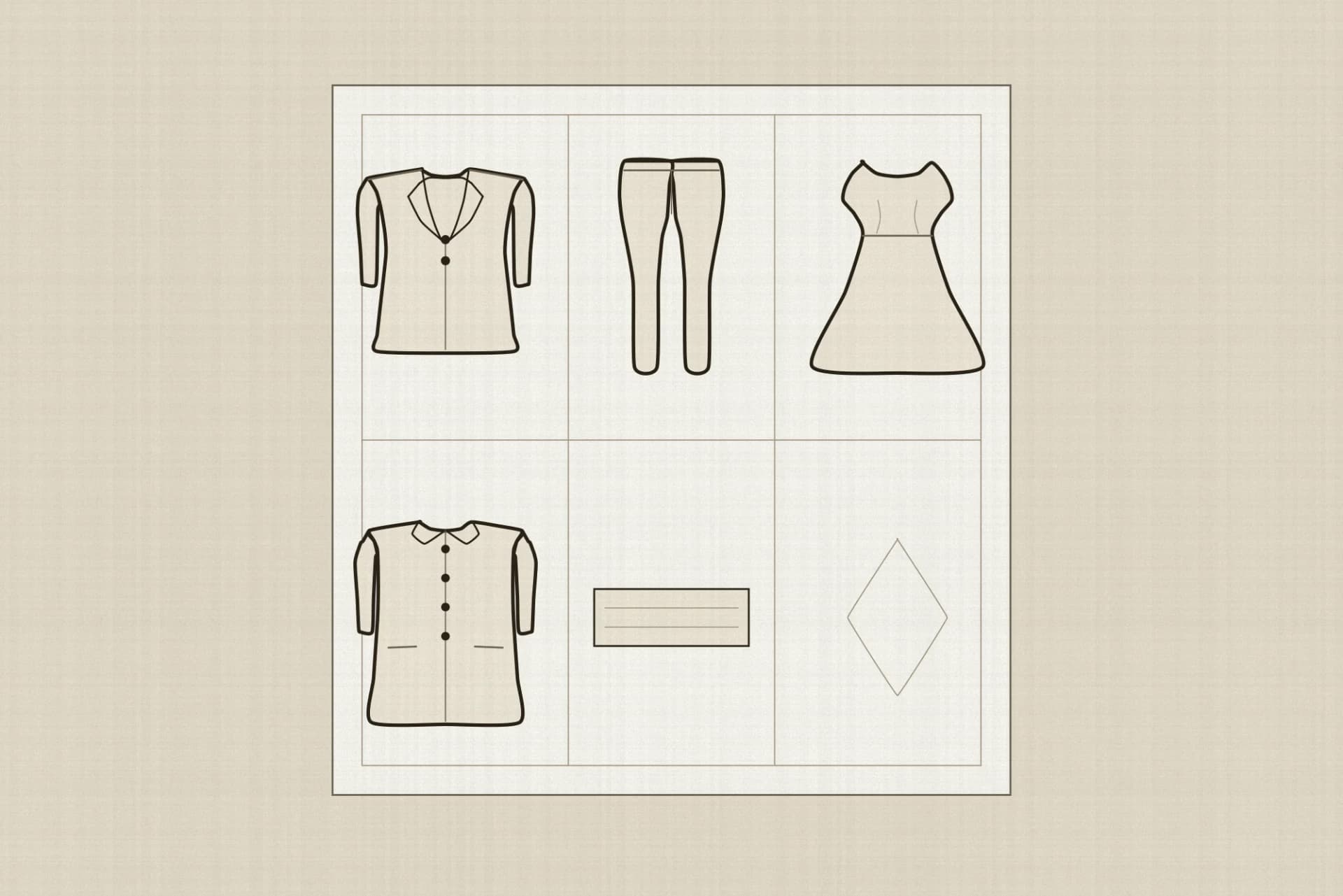
Ten ranges publish petite dresses. Five publish outerwear. Not one publishes shoes. The category coverage map of the researched directory, and how to use it before you search.
By Fit Research Desk
· 8 min read
8 min read·guide
How to read this piece. Every figure below is resolved from the brand directory at build time, not typed into this article: each one names the brand’s own page it came from and the date that page was read. Where a brand publishes nothing, this says so rather than estimating. The interpretation around the figures is editorial, and is marked as such. Nothing here was worn, tried or measured by the publication.
A reader who needs a petite coat does not need a list of petite brands. She needs the five ranges whose own pages say they stock petite outerwear, because searching the other sixteen is an afternoon spent proving a negative. Category coverage is the directory’s most under-used field, and this page is that field laid out flat.
Method, briefly: a range is recorded as covering a category only when its own published petite pages establish it. No inventory was counted, no stock level is implied, and a blank means the coverage could not be established rather than that the shelf is empty. What follows is the map, thickest category first.
The crowded categories: dresses, trousers, denim
Dresses are the most-published petite category in the directory, with trousers close behind and denim concentrated in fewer, deeper ranges. Where the dedicated pieces on this site compare what those ranges disclose about the garments, this map only answers the prior question of who is on the field at all.
Side by side
Five ranges across the bottom-heavy categories. Strength values are the directory’s reading of each brand’s own petite pages, and a blank cell is an unestablished one.
Five ranges across the bottom-heavy categories. Strength values are the directory’s reading of each brand’s own petite pages, and a blank cell is an unestablished one.
“Not established” means nobody has found the brand publishing it. It is not a “no”. Each record on the brand directory gives the reason for every gap.
The thin categories: outerwear, knitwear, workwear, occasionwear
Past the basics, coverage thins fast. Outerwear and knitwear cluster in a handful of mostly UK ranges, workwear in three, and occasionwear in three with one range carrying most of the weight. This is where the map earns its keep: the shortlists are short enough that starting anywhere else wastes time.
Side by side
The thin end of the map. Each strength resolves from the brand’s own petite pages; the blanks are unestablished, and there are many, which is the finding.
The thin end of the map. Each strength resolves from the brand’s own petite pages; the blanks are unestablished, and there are many, which is the finding.
“Not established” means nobody has found the brand publishing it. It is not a “no”. Each record on the brand directory gives the reason for every gap.
The empty cell: shoes
Not one researched range publishes petite shoe coverage, and the honest reading is that the category does not exist as a petite proposition: shoe sizing is foot-length sizing, and no range in the directory frames footwear as part of its petite offer. The proportion questions shoes raise for shorter frames are real, and this site addresses them as styling geometry rather than as a shopping category, because there is nothing here to shop by.
Using the map before you search
The category-first search
Name the category before the brand. The shortlist is usually under six ranges.
+Cross it with your shelf: the access map tells you which of those ranges publish delivery to you.
+Only then compare disclosures, using the dedicated category pieces linked above.
Coverage is not stock. A range can cover a category and have nothing in your size today.
A blank is unestablished, not empty. Ranges add categories seasonally, and records change when pages are re-read.
The map counts published coverage only. It never counts what a search engine believes a brand sells.
Sources
Guidance in this article is derived from the published material below. No garment described here has been worn or tested by the publication.
The fit research desk compiles published size charts, garment measurements and inseam data, then records what those numbers mean for a 5’4″-and-under frame. Findings are attributed to the measurements they came from.
Four bottoms-led ranges, and the one field none of them fills in.
Shopping · 7 min read
Save for later
Pin this story
Three formats travel differently: a headline pin for discovery, a quotation for reach, and a checklist for saves. All are 2:3.
Petite Revue
The petite category map: who actually stocks what
Ten ranges publish petite dresses. Five publish outerwear. Not one publishes shoes. The category coverage map of the researched directory, and how to use it before you search.
Headline pin · 1000 × 1500
Ten researched ranges publish petite dresses, five publish outerwear, none publish shoes. The category-by-category coverage map of the petite directory.