A blazer is the least forgiving thing in a wardrobe, because almost all of its structure sits across the shoulders, and the shoulder is the one place a tailor cannot help you cheaply. Everything else (sleeves, hem, waist suppression) is adjustable. The shoulder is the purchase decision.
Shoulder width comes first
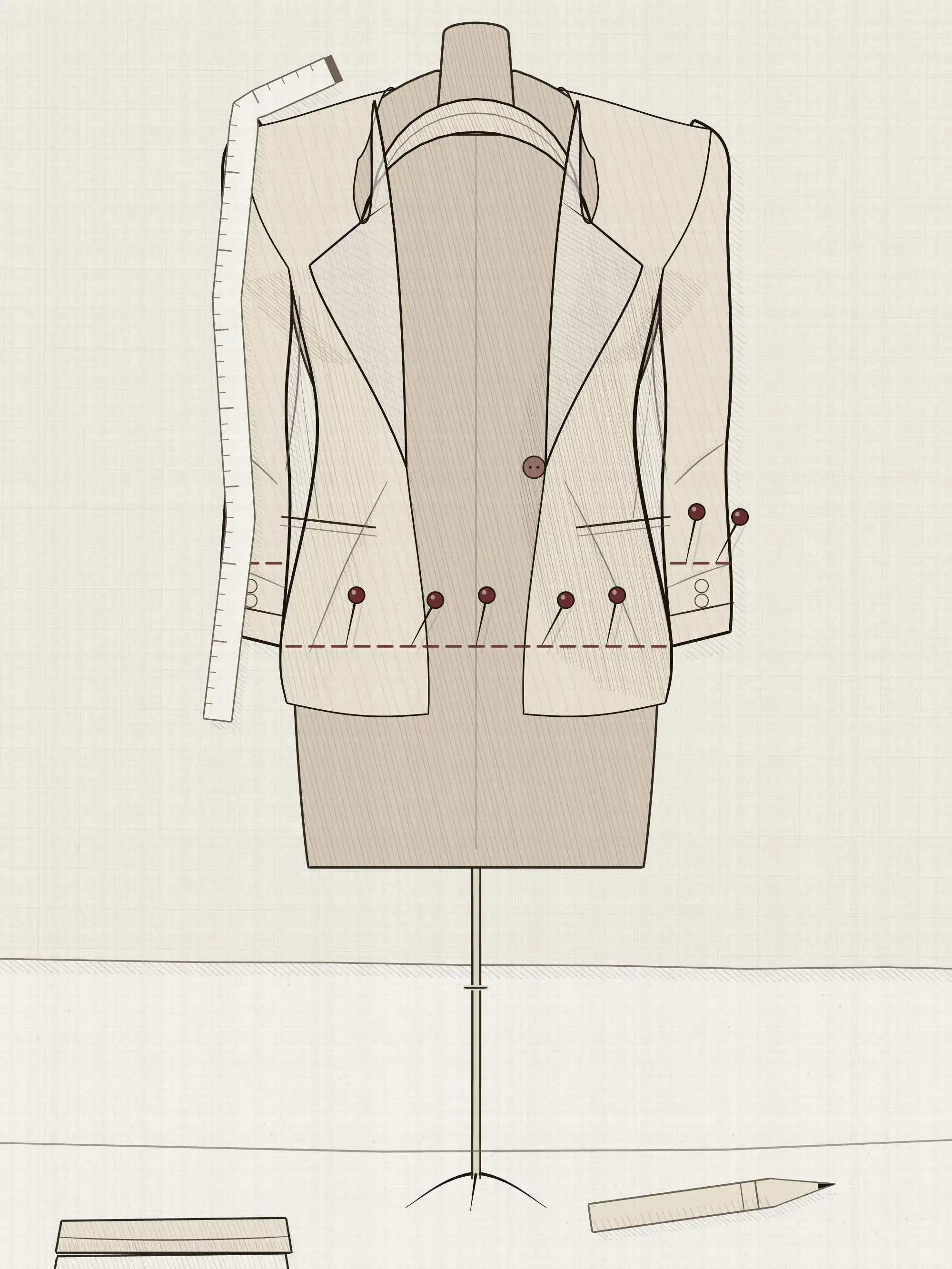
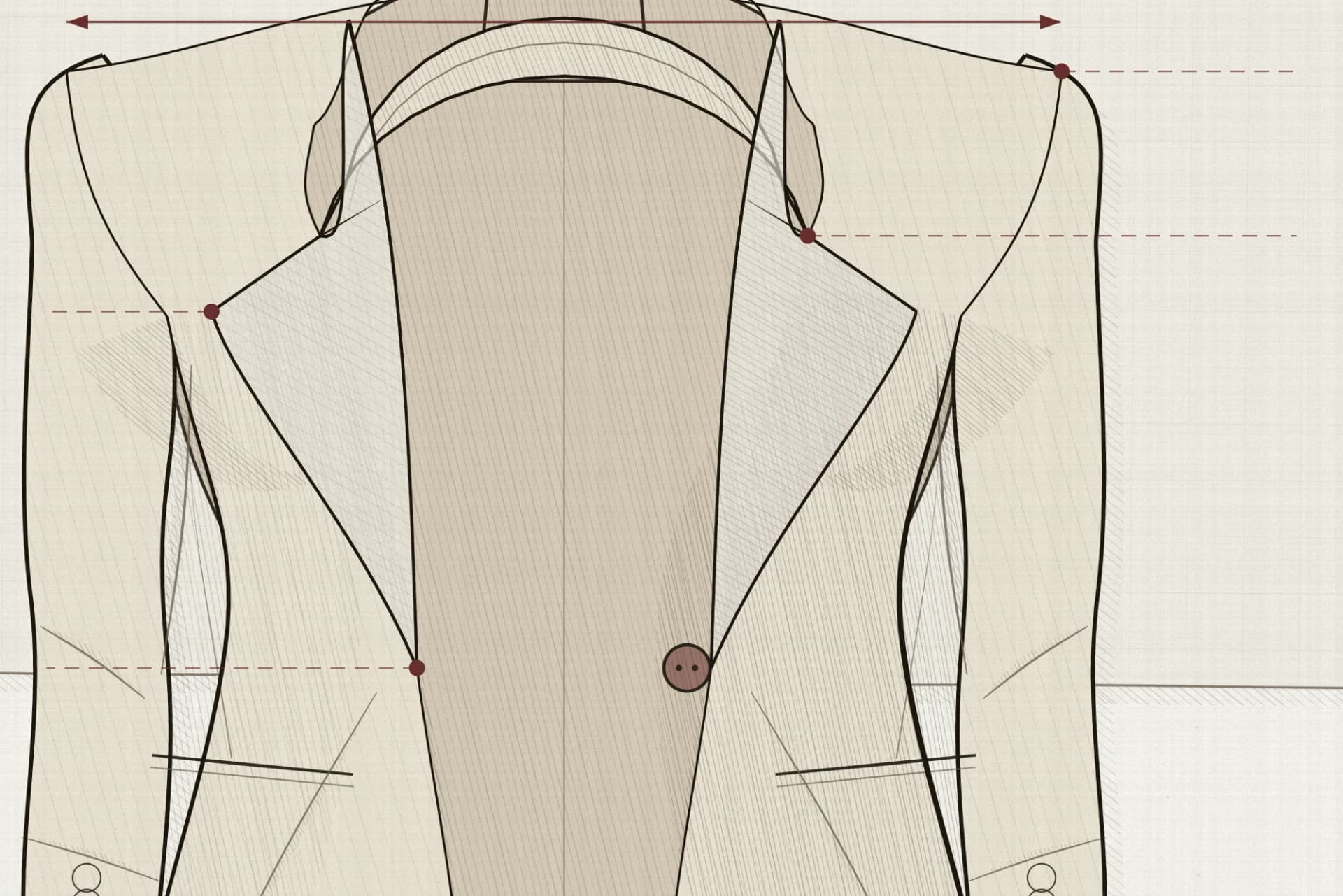
Measure your own shoulder across the back, seam point to seam point, using a jacket that already fits. Compare that against the brand’s published shoulder measurement. Within half an inch is workable. An inch wide and the sleeve head collapses down the arm, which drops the cuff, shortens the hand and adds a horizontal line exactly where you do not want one.
Back length and button stance do the rest
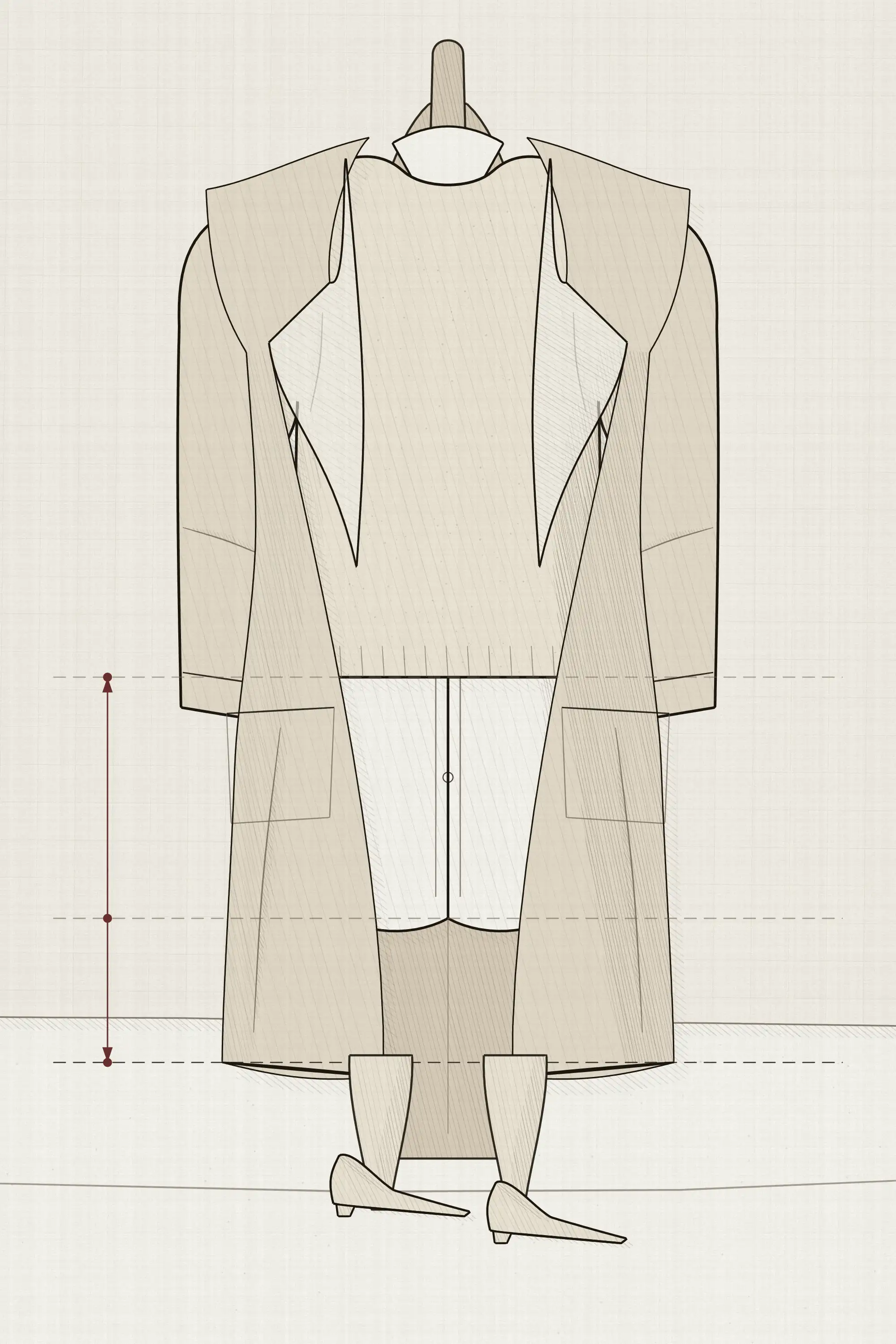
Back length decides whether the jacket finishes at the high hip or mid-thigh. Between 24″ and 26″ generally reads as a cropped-to-classic blazer on a 5’2″–5’4″ frame; past 28″ it becomes a coat. Button stance (the height of the top fastening button) sets where the lapel line stops narrowing. A stance sitting at or just above the natural waist lengthens the leg; a low stance shortens everything below it.
- Shoulder: within half an inch of a jacket that already fits you.
- Back length: 24″–26″ for a hip-length blazer at 5’2″–5’4″.
- Sleeve: measured from centre back; expect to shorten by 1″–2″ even on petite blocks.
- Button stance: at or above the natural waist.
None of these numbers guarantee a good jacket. They do reliably eliminate the ones that were never going to work, which on a product page is most of the value available.