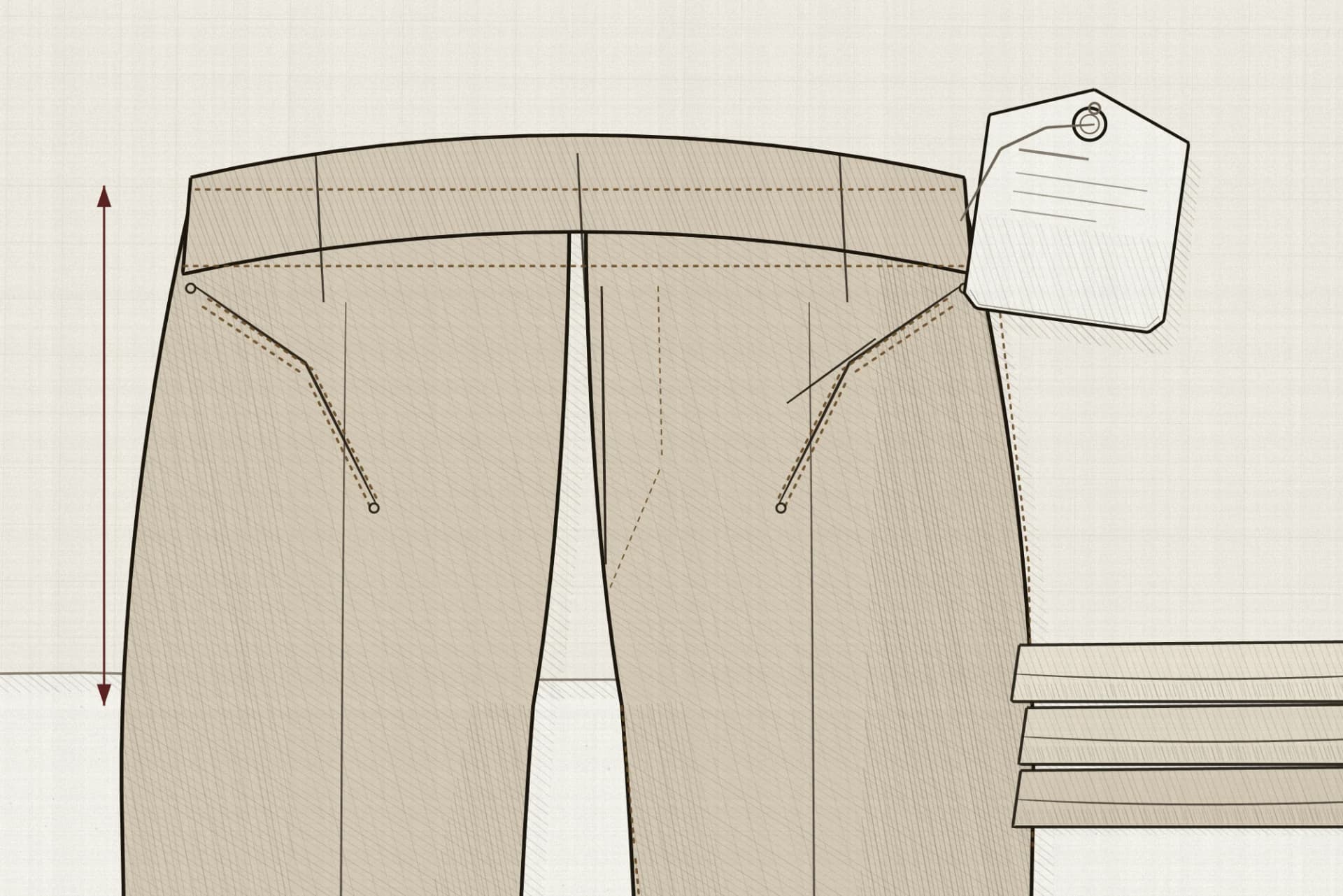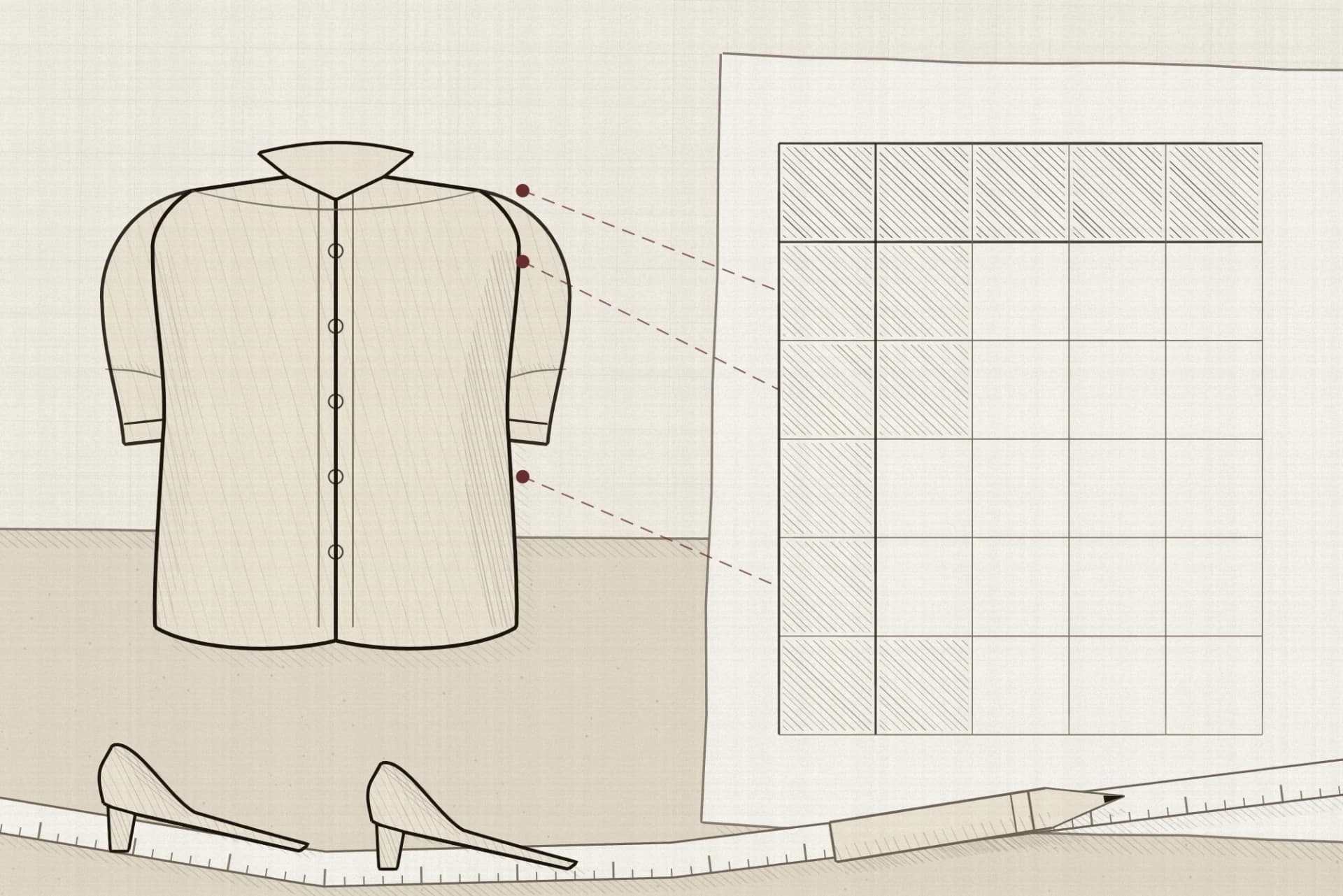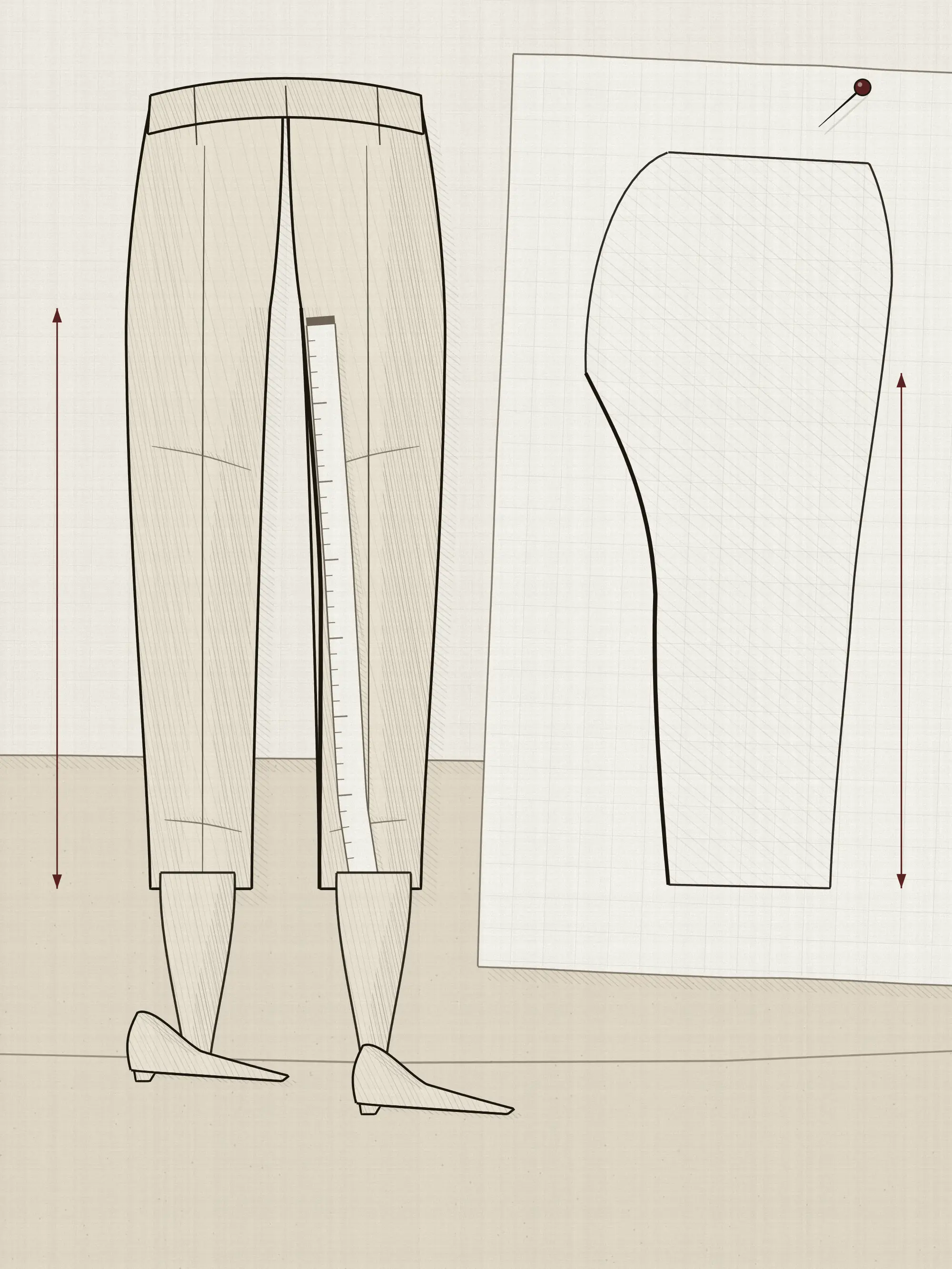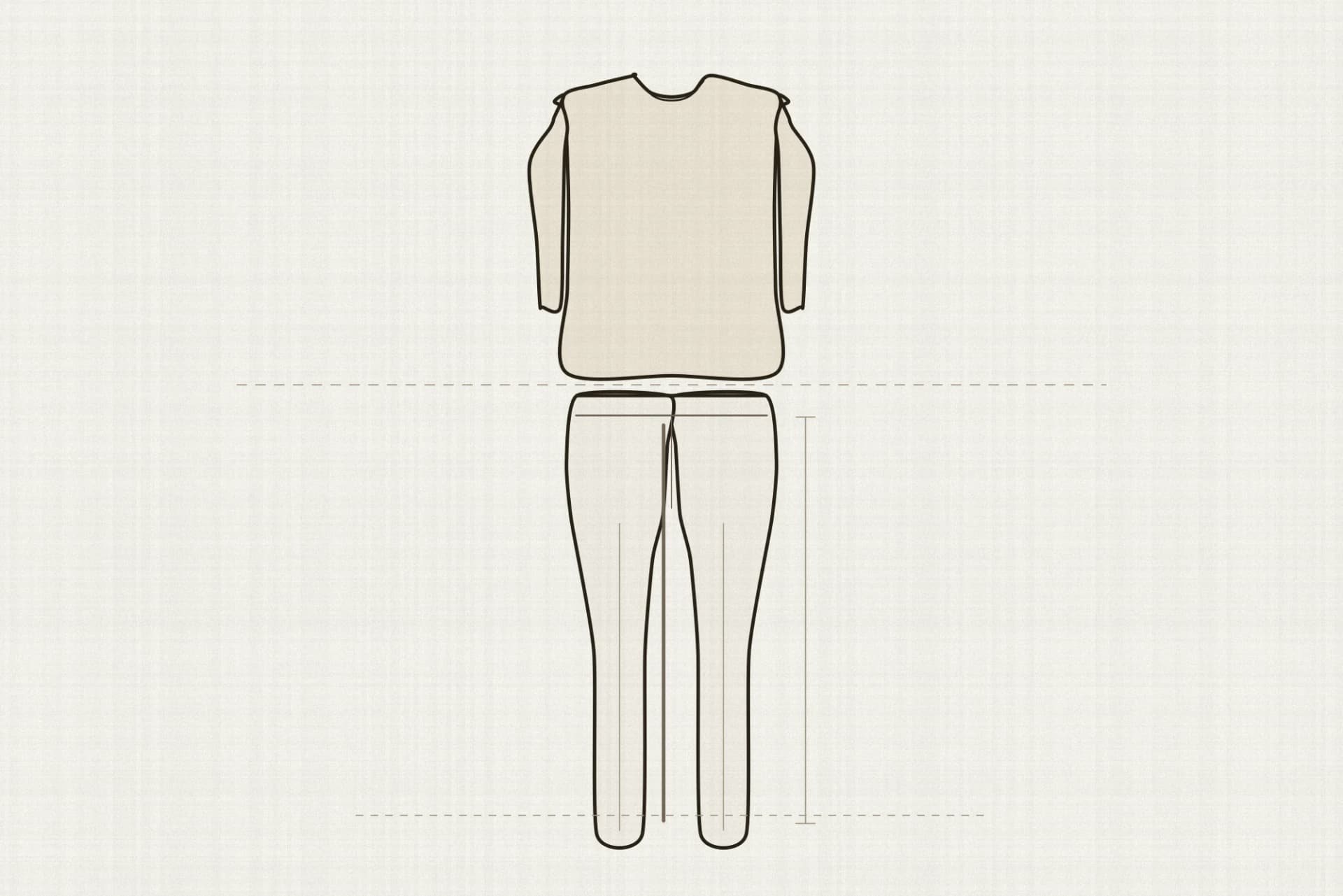
The petite label is applied to whole bodies, but bodies do not shorten uniformly. A reader can carry a standard torso over a short leg, or the reverse, and for her the petite rack and the regular rack are both half right. The obvious move, petite where you are petite and regular where you are not, is treated as a workaround. It should be treated as a strategy, because the published sizing of several researched ranges quietly supports it.
This piece assembles that support from three kinds of published evidence: a brand that grants the premise outright, a brand whose chart structure assumes it, and a group whose block descriptions make it safe by implication. Then the failure cases, because mixing has real ones.
The range that says it out loud
One researched brand states the premise in its own sizing guidance: that a customer may be petite in one part of the body and not another, and that buying across the two ranges is a legitimate answer. It is the only range in the directory that grants this explicitly, and the wording matters because it converts mixing from a customer improvisation into a use the sizing was designed for.
Recorded data
The record behind the explicit grant. Note the pairing: a published span and chart beside an undescribed block, which is exactly the disclosure profile where chart-led mixing is most useful.
- Petite size range
- 00P–18P (XSP–XLP)
- Measurement practice
- Body size chart only
- Petite approach
- Not established
The chart built around one half of the body
The structural evidence is stronger than the explicit kind, because a brand can withdraw a sentence more easily than a chart architecture. One denim-led range publishes its petite sizing as a bottoms table in its own right rather than as a column bolted to a full-body chart, and organises its petite offer around bottoms entirely. A range that sizes petite from the waist down has already conceded that the two halves are separate problems.
The lengths-only group, where mixing is safest
Three UK ranges state that their petite sizing changes garment lengths while key body measurements stay standard. That statement, examined closely, is a mixing licence. If the body measurements match the regular range, then a regular top and a petite trouser from the same brand are cut for the same body, and the only variable you are managing is length, which is the variable you can measure.
Side by side
The lengths-only group. A shortened standard block is the weakest claim a petite range can make and the strongest support the mixing strategy has: standard body, adjusted lengths.
- Shortened standard block
- Not established
- Not established
- Shortened standard block
- Body size chart only
- Not established
- Shortened standard block
- Body size chart only
- Not established
Where mixing breaks
Mixing fails exactly where the two halves stop being separable. A structured jacket ties shoulder, armhole and waist position into one drafted decision, so a redrafted petite block is doing work a regular top over a petite trouser cannot replicate. And the directory’s one petite-only specialist illustrates the opposite boundary: sizing developed for the petite frame as a whole, with no regular range to mix against.
Recorded data
The counterexample on the record: a whole-body petite proposition. Mixing is a strategy for split-range brands, and this record shows what a range without a split looks like.
- Petite approach
- Redrafted petite block
- Petite size range
- Not established
- Measurement practice
- Body size chart only
Running the strategy
The half-and-half method
- Decide which half of you is petite, from measurements rather than habit.
- Buy that half petite, chart-led, starting with the ranges above.
- Buy the other half regular, and spend the saving on the hem.
- Every claim about a named range above resolves from its published pages, and inherits their dates.
- Mixing manages length, not shape. Nothing here promises fit through the shoulder or hip.
- The strategy needs a published chart to steer by; on a silent range it degrades to guesswork.